Author Archives: Jane Cawthorne

About Jane Cawthorne

Jane is a writer currently living in Victoria BC. She grew up in Toronto and also spent many years in Calgary where, among other things, she taught Women's Studies at Mount Royal College (now Mount Royal University). Her work is about women on the brink of transformation.

Finding Joy Even Though Winter is Coming

Not to be all “Game of Thrones” or anything, but winter really is coming. It is unlikely there will be dragons, but if 2020 has taught us anything, there will be SOMETHING. I’m hoping it won’t be another four years of the orange menace, and certainly not another four years of the pandemic. I’m weary of them both. Weary and wary. Wary of my weariness. Weary of my wariness. I’d like to go through 24 hours without thinking something is out to do us all in.

Do you have a plan to get through the winter? Something you are doing to help you find joy? I do and I’m sharing. Maybe it will give you ideas.

  1. I’m being rigid about my schedule. It’s not a fancy schedule and includes blocks of time for exercise, work, and food prep. Yes, food prep. We’ve got to keep our strength up and eat well. And delicious food is still something that brings me joy, even if I have to make it myself (which also explains the exercise block.) If I keep my activities in specific blocks, I keep some variety in my day. I can’t work all the time anymore like I used to, (brain injury) and that’s a good thing. But I think a lot of people newly working from home are reporting that they work ALL THE TIME. Let yourself stop and move on to something else.
  2. I get up early and go to bed early.
  3. I meditate every day. I’ve been meditating for decades, but never with this much dedication. I think I’m starting to get the hang of it.
  4. I have stopped drinking alcohol. I actually stopped a long time ago, (brain injury), but I think it is worth mentioning. It’s a depressant. I miss it sometimes, but I have more joy without it. Sometimes, I take a sip of my husband’s drink if it is a really nice smelling wine or a good bourbon. Just a sip. Although it was hard while there were still opportunities for social interaction, it’s not hard now. If you’ve been thinking about it, maybe this is a good time to experiment. Maybe it will bring you joy.
  5. I have cleaned my closet, sock drawer, etc., and edited out worn, horrible or ill-fitting clothes. Again, they are a depressant, at least to me. If I can’t wear that thing I used to slob around in on the rare days I slobbed around, I won’t wear it. I have to choose something better, and I feel better.
  6. I go for a walk every day. My longest regular walk is about 8.5 km and my shortest is to the store and back (about 15 minutes). No matter what, I get outside. I think about what I’m seeing. I look for beauty. A bird, the changing leaves, someone in a nice coat. It’s there. Pay attention.
  7. I try to be helpful to others. I check in with people who are alone. I drop baking off with a neighbour. I write cards and send them to people. This is one of my favourites. It involves several enjoyable steps. a) I have to order cards from a stationery store. I love stationery stores, even on line. My favourite is The Regional Assembly of Text in East Vancouver. I have one closer to me that I really like too, called Take Note, in the Junction. Since I don’t physically go to many stores anymore, it doesn’t matter where a store is. But I try to buy from independent retailers. b) I have to go through my address book and think about everyone and who I haven’t been in contact with lately. c) I have to compose something lively and smart. (It’s a goal, anyway.) It makes me feel better and I love thinking of them receiving the card in the mail, opening it and laughing. d) I have to walk to the post box. (see 6.)
  8. I have projects unrelated to work. For example, early in the pandemic, I dug up everything I have related to knitting. I found half finished mittens, a sweater I started in 1996, and more wool than I imagined I had. So I’m knitting. I’m thinking about breaking into crochet. I have an idea of taking a beautiful landscape photograph, using the app “Bricks” to pixelate it, (Bricks makes everything look like it is made out of Lego) and creating a colour blocked pattern so I can crochet one small square at a time and not get overwhelmed. Then I could put it together like a quilt. If that half a sweater I dug up is any indication, I might finish it by 2040. Crazy as it seems, looking ahead on a project like that makes me feel better. There is a future.
  9. I haven’t given up on getting better from my brain injury. While I think I’ve run my course with what professionals can do to help me, they say time heals. And I have time, all the gods and goddesses willing, and I notice small, incremental improvements, especially in my balance (see #1 and exercise). And these improvements bring me joy. Is there something you can work on improving in your life?
  10. I limit my intake of news and social media. It’s too much. But at least weekly, I take positive action on a change I want to see in the world. I write a politician, I sign a petition, I learn more about a problem that seems insurmountable, not from the news but from a longform article or book or documentary, and I find reasons for hope and learn about other actions I can take.

Happy Winter! It’s going to be ok. This does not have to be the winter of our discontent. We’ll get through this.
Rest in Power, Helen Reddy

I was nine years old when “I Am Woman” came out and the people around me mocked it. The song was not celebratory or empowering; it was embarrassing. My parents turned it off when it came on the radio. People said mean things about Helen Reddy and attacked her appearance.

This is what I remember. So, being nine, I learned the lesson. Don’t roar. You are not strong. Better not to be noticed than to be mocked. Fade into the background. And I did. For a long time.

The fact that I ended up a feminist, a teacher of women’s studies and an abortion rights advocate on the local and sometimes national stage for twenty five years is an absolute wonder to me when I think about the way I was raised. And when I think about my resistance to Helen Reddy. Sure, it was always a cheesy song. But these kinds of anthems often are. I was probably in my 30s or 40s the first time I actually sang along to it at a rally. Somehow, I knew all the words. They had made their way into me. They were always there.

What does this teach me? First of all, the power of bullying and mockery is intense. There’s a reason why people do it. There are a lot of kids growing up in Tr*mp’s era (and the years leading up to it that enabled this kind of shitshow) who have been silenced. They have had their natural inclination toward fairness and justice squelched. Those poor kids.

It might take them decades to find their way back, and the only way they will is if they find examples, over and over and over, to counter the baloney they are being fed. Be those voices. Talk about justice and social responsibility and kindness and the importance of holding each other up. Talk about healing wounds—in people, in the environment, in our relationships to each other and the world.

Secondly, these initial wounds CAN be overcome. I overcame them, and did it with very few teachers. Very few. I can count on one hand who lifted me out of the misogyny and racism that I learned as a child. And I am so grateful to them. And then I was resourced. I had a brilliant liberal arts education at some of the top universities in the country. I was granted scholarships so I could go, the first in my family to earn a degree. These scholarships were funded by people who knew the importance of education, of specifically an arts education, to open minds. They helped me, these strangers.

And I was held up and helped by my community, especially, (of all the places to note) in Calgary. I met good feminists in Alberta—too many to name. The kind of women that Helen Reddy sang about. It’s where I did most of my teaching. It’s also where I was subjected to the same kind of mockery and bullying that I experienced when I was nine. I wasn’t always successful in the way I handled it, but I wasn’t a child anymore. And this time I had help.

Now when I hear, “Yes, I am wise, but it’s wisdom born from pain. Yes, I’ve paid the price, but look how much I’ve gained. If I have to, I can do anything. I am strong. I am invincible,” I don’t feel embarrassed by the cheesiness of the song. I feel grateful. Thanks for the anthem, Ms. Reddy, and thanks to all the women along the way who gave it meaning for me.

Top Ten books

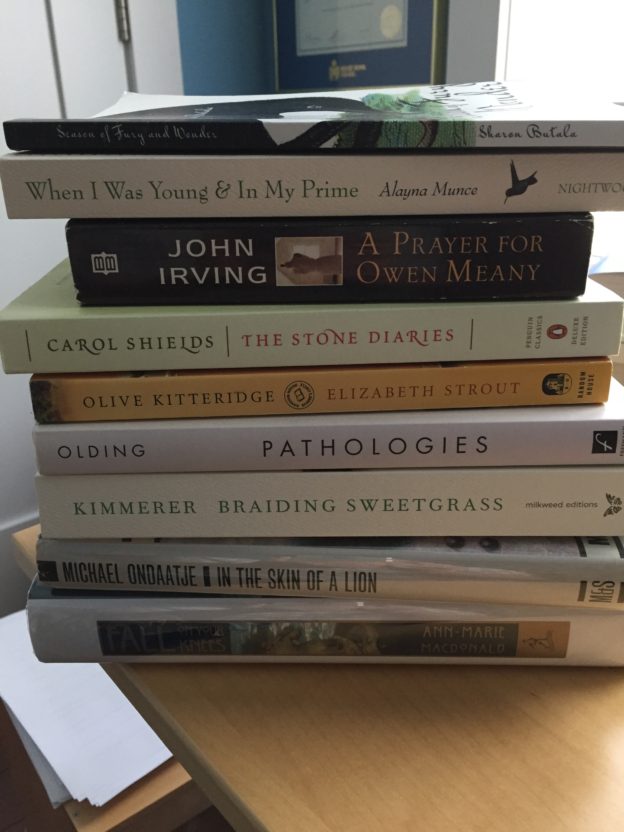
I keep a running list of the ten books I would have if I could only have ten books. This year, I’ve replaced four books, so this has been a pretty remarkable reading year.

Or, I’ve changed.

It’s probably a little of both.

These books are like friends, and I have to be able to call on them at a moment’s notice. Just knowing they are on the shelf makes me feel better.

Here’s the current list:

Braiding Sweetgrass, Robin Wall Kimmerer (So much wisdom and kindness that helps me to see a way to be in the world with gratitude and reciprocity.) *

The First Free Women, Matty Weingast Ed. (It’s like a companion book for me now, with such wisdom, and it feels so good in my hands. It’s missing from the picture because I’ve given it away–AGAIN–this time to a friend who just lost her mother. It’s the kind of book that can help with that.) *

Season of Fury and Wonder, Sharon Butala (Which replaced Butala’s The Perfection of the Morning, and thankfully, I don’t really have to choose between these two books since this list is not necessitated by lack of space or the need to keep everything I own in a back pack.) *

When I Was Young & In My Prime, Alayna Munce (Gosh, I loved it. I have to read it again, but for now, it’s on the list because–again–of the kindness that is evident throughout and the insight into the frailty of humans. *

Olive Kitteridge, Elizabeth Strout (Oh, how I love a difficult woman.)

The Stone Diaries, Carol Shields (I’ve studied it backwards and forwards, I wrote my MFA craft thesis on it, and never tire of it. A complex telling, a fascinating character, and such insight into the human condition. What is not to love?)

Fall On Your Knees, Ann-Marie MacDonald (An epic, multi-generational story in which the plot twists and turns. The characters live on in my heart.)

Pathologies, Susan Olding (I return to this book time and again in amazement.)

A Prayer for Owen Meany, John Irving (I have only read it once and have always meant to read it again, but now I am afraid that I won’t love it as much as I once did, that it will seem inevitable to me, and somehow tired, but it stays on the list.)

In the Skin of a Lion, Michael Ondaatje (It’s the hometown setting–Toronto in all it’s glory, the historicity, the complexity of the telling and the flaws, the beautiful flaws, which in the hands of a writer like this makes one wonder if they are flaws at all.)

(* new addtions this year!)

Late addition: How could I have forgotten The Summer Book, Tove Jansson? My MFA mentor, Sandra Scofield, had me read it and I am so grateful. I just took it down from the shelf to read again as summer ends. It is lovely. So make that eleven books.

What am I reading? Alayna Munce and Joan Thomas

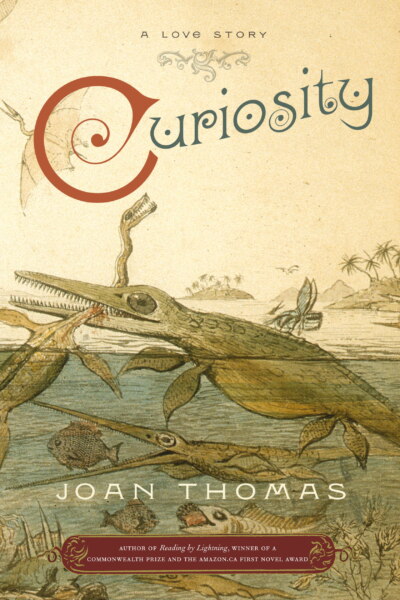
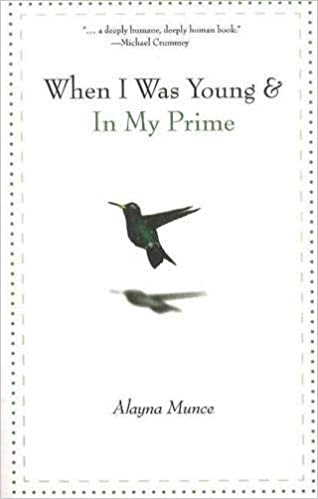
It’s such a pleasure to read a good book. I’ve got two to recommend: Alayna Munce’s When I Was Young & In My Prime and Joan Thomas’s Curiosity.

I don’t know what the heck I was doing in 2005 that I missed When I was Young & In My Prime. I’m trying to think back. Oh yeah, I was recovering from cancer. So I guess that explains it. But this book is everything I love—a multi-generational tale told in multiple points of view. This is exactly what I studied throughout my MFA, and how I missed it then is another puzzle. It will forever be listed in the same category as The Stone Diaries and Fall On Your Knees. So it’s THAT good. But it just goes to show, some of the best books just don’t get onto our radar.

What do I love about this book? Munce is a poet and it shows in her exacting and evocative prose. She allows her characters to make mistakes, to grow, to fall back, to grow again. They are so real. There is such a great depth of kindness depicted here. For example, the main character has a job bathing seniors in the nursing home. It is the every-day-ness of kindness that I love in this book, the call to deep human connection and the depiction of the frailty of it. I love the failure of the characters to always know exactly what should come next. This is to true to life.

Munce also has an interest in how memory works in this book, a a particular obsession of mine having lost most of it. The way she depicts the loss of memory, both from an individual’s mind and from collective history is thought provoking and so very real.

I had a friend recently say, “We don’t know how to die anymore.” She meant that we have forgotten or lost sight of the rituals around death. We don’t know how to let someone go. We’ve lost the grace in it. Munce is a writer who knows that grace. I feel the loss of the main character’s grandfather as though he were my own. To create empathy so skillfully is a true accomplishment.

And on the FAF scale (feminist as fuck scale) it ranks a 5 out of 5.

Joan Thomas’s latest novel, Five Wives is what I should be reading, but I had to go back first to Curiosity. This book slays.

Image of Hardcover of Curiosity

It is the imagined story of real life Mary Anning, who sold curiosities from the sea that she found in the cliffs by the town of Lyme Regis. It is set in the time before Darwin’s theories were accepted and her discoveries are inexplicable given the understandings of the day. Ammonites and other fossils are sold as charms, with equally charming stories about what protections they offer the buyer. A particular find referred to as “Devil’s toes” is a favourite of mine, and I have no doubt that it is also historically accurate. That is the kind of faith Thomas earns in the reader.

What Thomas gives us is a ripper of a tale: an impoverished girl making her living, making her way, going beyond her station—however you want to put it—within a world where men continually use her discoveries and her knowledge for their own advancement. She is never given proper credit. As Thomas notes in the Author’s Note, the effort to establish Mary Anning’s scientific credentials did not begin until the 1930s. Yet she emerges as a figure more worthy of the reader’s respect than any of those “scientists” in the fields of geology and “undergroundology” that are all around her. She dreams of being recognized by the Royal Society, but such recognition will never happen and she becomes a kind of Pygmalion character, too fancy in her learning and speech to be fully accepted by townsfolk and too poor to ever be accepted by the upper class.

The book gets a five star FAF rating from me. Like all the best historical fiction, it is oddly contemporary in its concerns. Women still struggle for the recognition their work deserves. And the class issues gives it that “intersectionality” that is part of real life. The author has a sociological eye that I appreciate. Her characters are set in a society in a time and place and we learn what the rules are and how they are all constrained by them.

What is particularly compelling to me is the way in which Thomas weaves the details of her research into a compelling story that never feels weighed down by that same research. From the use of common terms of the time and the occasional drift into contemporaneous dialect, to the research of figures like Lamarck and the actual letters and imagined letters of Henry De La Beche, to the explication of theological issues of the day, it all serves to move the story and enrich our sense of the characters. It is a tour de force.

I have had this book in my possession since 2010, but it was not until now that I read it. This happens sometimes. Now, on to Five Wives! But first I have to edit my own book. Here’s hoping it doesn’t take me ten years to get back to Five Wives.

How to Get Up When You’re Down.

  1. Pretend. Pretend you are a person who can manage some part of the day ahead. Just pretend.
  2. Pick something small that you want to do. Anything. If you don’t know what you want to do, make figuring that out your task. Maybe you’d like to get a library card or replace the broken button on your favourite shirt. Sometimes you don’t want to do something, but you want the outcome you would get if you did it. Maybe the dirty dishes in the kitchen are making you sad. You don’t want to do the dishes, but you do want to have a clean counter. Maybe start small. Empty the sink and stack the bowls. Fill the sink with water and soap and wash only the bowls. Then you can have some cereal in a clean bowl. Yay! Celebrate the cereal. The rest can wait. Or maybe the cereal helps, and you can move on to the mugs.
  3. Don’t worry about whether the thing you choose to do is the most important thing to do. You’ll get to those things. (Really, you will.) Do the thing.
  4. Treat yourself. It doesn’t have to be a big deal. Don’t make it dependent on success unless that works for you. You might want to watch the first season of Community for the tenth time. You can say, After I do the thing I need to do, I can watch one episode. Or you can say, Watch an episode because laughing will cheer me up and help motivate me. Do what is right for you. Make room for joy.
  5. When you wake up, let yourself think. Think about something you are grateful for. One thing. Name it to yourself. Say it out loud. Say, I am grateful for cereal. I am grateful for a new day. I am grateful I am breathing.
  6. If you can get out of bed, make your bed. Making your bed is a gift your present self gives to your future self. Some day soon, you will have the energy to do the laundry. For now, just make the bed. If you have never made a bed, watch a YouTube video about it. Look at your made bed and feel satisfied.
  7. If you have a lot of things you have to do and they fill your head, try to pick one at a time. You can’t do everything at once. No one can. Your success in dealing with one thing or part of one thing will prove your competence to yourself and it will help you get to another task. Say, I can do that, and do it. Eventually, you will make a plan. Remember, a plan is just a plan. It can change. You can change it if it isn’t working or is unrealistic. Evaluate the plan regularly and change what needs to be changed. Don’t let the plan sabotage you. The plan is supposed to help you.
  8. Some days everything is challenging. That’s OK. You know what you have to do and there’s no getting out of those things. Work. Caring for loved ones. Do what you can do. Somethings can wait though. If you have 100 emails waiting, respond to 1. That is a start. Give yourself a pat on the back. There’s probably some that don’t need a response at all. Scan through them. Delete. Unsubscribe. Maybe it is hard for you to get out of bed, hard to walk, or get up the stairs. Try a few steps, one or two stairs. If you keep at it, some day you might be able to walk around the block, one step at a time. It might be reading a page. It might be writing a page. Go one word or one sentence at a time. Sound it out. Choose the thing. Do it. Revel in your success. Say to yourself, Look! I did that. Rest.
  9. Save your strength. Don’t use it all up on something that is too much for you right now. Be kind to yourself. Learn to say no, or at least, not right now.
  10. Do one thing to make your environment more calm. Maybe turn the TV off. Stay calm for the things you have to do. Stay calm so you can think.
  11. Focus on something natural. A tree outside. A bird. Your child’s beautiful curly hair. Something growing in the cracks of the pavement. See the beauty in it. Think about one way that you are growing too.
  12. Drink a glass of water. Enjoy it. Say to yourself, That was really good.
  13. Intertwine your fingers, face your palms out and raise them above your head if that’s something you can do and stretch. Stretch something. Anything. Enjoy the feeling of your body moving, whatever part of it can move.
  14. Take a deep breath. Feel the air entering and leaving your lungs. Know that your body is good at change. It changes with every breath. Know that you are alive and breathing, and changing all the time.
  15. Forget everything negative you ever believed about yourself. Try to learn about yourself again. What are you good at? What would you like to get better at? Don’t worry about what you used to be good at and lost. That was another person in another time. Focus on the here and now.
  16. Build on success. Pick another task. Don’t think it has to be bigger. Just do another thing. For example, maybe you have to apply for something. Maybe you need to get a divorce. (I’m sorry you have to get a divorce.) You’ve put it off forever because you dread it. But it has to be done. Maybe the first task is to find a form on line or a contact on line. That’s good enough. Bookmark it or jot it down. Congratulate yourself. Take a break for an hour or until the next day before you try to fill out that form or connect with that contact. If you run into a problem, take a minute to rest and think about what you need to do the next part. Maybe that is a tomorrow task. Put it on a list. Congratulate yourself for making a list.
  17. Keep a list. Cross things off. Give yourself a high five when you cross something off. Have a glass of water again.
  18. Help someone. Whoever you are, whatever your problem is, you can do something kind for someone else. If you’re stuck inside, be nice to someone online. Answer a question for them. Tell them they are doing well. If you’ve made it to the market, you can leave something on a neighbour’s doorstep. There are millions of ways to be kind. Being kind builds you up. Congratulate yourself. Do a little dance in your chair. Say, That was a good thing to do and it made me feel better. Don’t wait for a thank you. It might come and it might not. Either way, you’ve done something kind. Keep it to yourself. Treasure that little kindness. Let it build you up.
  19. Go to bed when you are tired. Think about the thing(s) you accomplished. You stayed alive. You breathed in and out. Good for you.
  20. Keep trying.

Writing Trauma

I’ve been working on a wee craft essay on writing about trauma. It’s a strange piece that has been on and off my desk for about a year. I’ve done research and am shocked by how little has been written about how best to convey trauma. It would be a great topic for a creative writing class, and one I would really like to teach. (Anyone want to give me the gig?)

There is lots of writing about the therapeutic benefits of writing about trauma for the writer. We all know it can be a great relief to get it all down on the page. It is a clarifying experience. But that’s not what I’m interested in for this essay. There’s not much (any?) craft advice about writing techniques that can be used to convey trauma.

I’m developing a few theories. Here’s hoping I find an audience for the essay.

We are all the walking wounded. We are all traumatized. That’s why there is such a thing as a trigger warning. We know we can be set off again. How do we write about traumatic events and experiences in a way that does not spread the trauma around? If we agree that traumatizing or re-traumatizing others is not desirable, (and maybe we don’t agree) what can we do to convey the gravity of the traumatic situation without doing harm to the reader? Is it possible? Are the techniques we can use different if the trauma is recounted as part of real life in memoir or as part of the experience of a fictional character?

If you have thoughts, let me know in the comments. I’m getting back to the essay tomorrow.