Tag Archives: pandemic

Six Years and Counting

March 13, 2020.

My husband and I decided to walk downtown to go see his parents. A long walk, but a nice one. We visited for a couple of hours. I can’t remember if we had tea or just did the usual technology problem-solving that had become a regular part of any visit. When we started the trek back home, it seemed pretty quiet for downtown Toronto. Hungry, we stopped in at Kinton Ramen on Bloor. When we got there, it was almost empty. Unheard of. There were the two of us sitting by the front window and another group of four in the back at a high top. The staff looked freaked out. We looked at each other and ate our ramen. I knew this would be the last time we were in a restaurant for a while. I’m sure the others in the restaurant knew too. By the next day (I think), they were shut down. We hopped on the subway after lunch, feeling the urge to get home quickly. There were about three other people on the same subway car. Ominous. On the short walk home from the station, we acknowledged that this was the last day we would have of going into restaurants and using the subway and… who knew what? Our lives changed just like that. Like Joan Didion says, “Life changes in the instant.” That was the instant.

I, unfortunately, already had lots of practice at isolation. Regular readers of this blog and anyone who follows my work knows I had a car accident in 2016 that left me badly concussed. I was unable to read, write, think too much, deal with light or loud noise or too much of anything. I had been working hard to heal and was making some limited progress. But I have to admit that at first, the slow pace of lockdown life was simply a relief to me. I didn’t have to say no to doing social things. I wasn’t missing anything. It was quiet. There was little traffic. For a long time, restaurants had been too loud and I would wear ear plugs if I went to one. Now I couldn’t go. The choice was taken away from me. Same for movies, concerts and everything else that was part of regular life. So, strangely, I was at an advantage at the start.

One person close to me called on March 15, panicked and crying. She said, “How are we supposed to do this? I can’t do this!” and I thought, “Welcome to the world I’ve been living in for four years.” I didn’t say that. Instead, I made a few suggestions on how to cope. However, panic was her preferred response, as it was for many people. I thought back to the start of my concussion and realized it had been for me too. But I had to panic very quietly. Everyone just needed some time. Occasionally, someone would ask me why I was so calm and I would remind them it was because I was already living a very contained life.

I remembered the first SARS. My friend’s father was dying and she was not allowed to go to the hospital to see him. It was serious. It was airborne. Toronto was in a panic. I knew this new SARS was airborne too (how could it not be?), but even I shied away from the implications at first. I still believed in public health. I followed their advice. I washed my hands and wiped down my groceries. That feels like eons ago. I remember an outcry from people who resented being told to wash their hands. I was absolutely astounded by this. Who doesn’t wash their hands, I wondered? I could not imagine what else people would be unwilling to do for themselves and for each other. Anyway, I assumed that there was a mask shortage and that was why the powers that be were not advising masking as a general practice for everyone. They made unintelligible distinctions between aerosols and other particles and whatever and it was all nonsense. I wished they would have just been honest about it, admit there was a shortage and ask people to leave supplies for health care workers first. But that was a dream world. Look at what had happened with toilet paper. Masks would have been hoarded the same way.

What I remember most about this time is how Public Health and other authorities muddied the message. The message never got clear again. How hard would it have been to explain harm reduction? The precautionary principle? The need to ramp up production of PPE?

I didn’t want to take medical supplies away from those who desperately needed them, health care workers or other workers who had no choice but to be in close proximity to others, so I started sewing. I gathered every scrap of fabric I could find, raided my craft supplies, found some elastic and got busy. First I made two layer cloth masks, then three, then four, at which point my sewing machine could barely get through the layers. I gave them to everyone I knew, to anyone who wanted them. It was something I could do to help, and I did it. I ran out of elastic. Eventually I found a small craft store that was packing orders for people and offering door stop pick up. With my elastic supply replete again, I kept sewing. Once masks were plentiful again, and no one on the “front lines” was going to run short, I started using N95s. Cloth masks are better than nothing, but not the best. I wore N95s all the time indoors in public. I’ve never stopped.

In the beginning, I wondered when I would see my daughter again. In a way, I was lucky. She was working “in the field” as an engineer and had to travel to Northern Ontario regularly. This travel and living in large work camps was incredibly stressful for her. The risks of getting covid were huge. On her way to and from home, she would stay in Toronto a few extra hours or an extra day. We would sit in the freezing cold together in the garage with the door open, masks on. That’s how we had Christmas in 2020. We called it, “The Saddest Christmas Ever.”

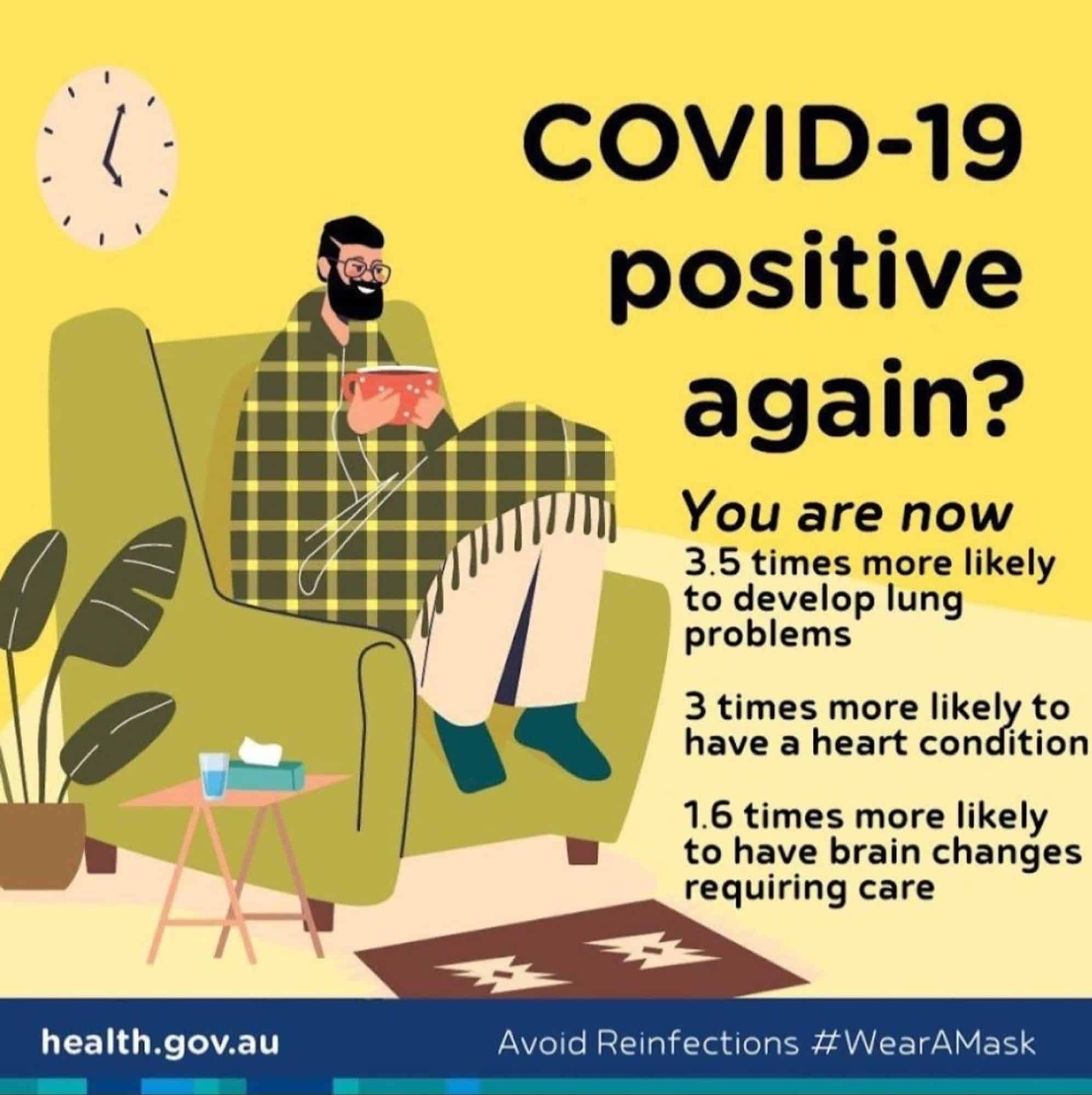
Toronto was different than other parts of Canada. Lockdown lasted a long time. Everything except truly essential services were closed. We couldn’t get a haircut. Such a minor inconvenience, but an example. Businesses were in crisis. For months. Rural people had the luxury of space. We did not. So much of what the rest of the country depended on came from big urban centres like Toronto. Those Amazon deliveries were starting from warehouses with masked workers in Toronto. Essential workers. Workers who kept us all going. Workers who had to get to and from home. Everyone breathing. There was a positive sense of everyone doing their part. We went outside and banged pots for health care workers. But people are impatient. It went on too long. The implications of what we were learning (that we actually COULD support each other, that temporary benefits actually COULD be extended into a UBI type program, that less traffic meant cleaner air and a healthier environment, that there were new, technology driven ways to increase inclusivity and so on) would impact everything about public policy. Some people didn’t want that. Most people I guess. It would be expensive, they said, not understanding what might be gained. Getting “back to normal” remained a goal, even though normal was so far back in the rearview mirror it was barely a speck. We were just beginning to understand the long term implications of Covid, of Long Covid, that Covid is a vascular disease that presents as a respiratory disease and continues to do damage long after the cold symptoms are gone. We knew almost right away it affected the heart and the brain. I had already done so much to heal my brain. I did not want to start over.

It wasn’t all bad. I remember on the second day meeting friends outside by Lake Ontario and all of us being completely amazed at the silence, at the clarity of the sky. No planes. No traffic. I had a 4km walk I did almost daily which took me through the Humber River Valley and to Lake Ontario. Animals were coming back. There were so many birds. One day, I encountered a ten point buck. A miracle.

We had such hope when vaccines came.

I don’t have the heart to continue. It is just too sad.

The pandemic changed our lives. My husband found the most enjoyable parts of his job were gone and retired. Early. We were lucky we could do that. People died. Public Health died. We got vaccinated. We left Toronto and came out west. More space. Fewer people. Easier. At least it was for a while. Until Omicron. The variant of variants. The variant that should have demonstrated once and for all why continuing to get and give Covid over and over was a terrible idea. But humans, man. We never learn.

There is chatter about the development of a sterilizing nasal vaccine. Maybe five years away. Imagine if the amount of money that just went into killing a bunch of folks in the Middle East had been dedicated to vaccines, or even to cleaning the air. Imagine.
Covid Is Never Going To Be Over

Covid is never going to be over. Never. And I’m tired.

I’m tired of being one of the very few people who remains masked and cautious. Even my doctors don’t. I’m tired of hearing the pandemic talked about in the past tense when, in the past three months alone, six people in my immediate circle have had it. And those are the ones who admit it. Most people pretend they have a cold or allergies. Dollars to donuts, it’s covid. But we’ll never know because no one tests, and tests aren’t available, and when they are available they are expensive, and the rapid tests are shitty anyway, so why bother? I’m tired of hearing people talk about their new mysterious illnesses as though they are completely removed from their covid infections. Raynaud’s disease. Shingles. Heart problems. Inflammatory diseases. A stroke. Brain fog. Memory loss. Accelerating dementia. It’s related to covid. It’s infuriating.

Speaking to a friend today, I said that if she ever sees me in a crowded room without a mask, she will have to know I’m suicidal. It will mean I’ve given up on trying to live. And I have tried really hard to live. In the past ten years, I’ve recovered from a terrible brain injury. All the more reason to protect my brain. I know what’s at stake. I’ve been through my own memory loss and loss of executive function, and I hate to tell you this, but I recognize it in others. I’ve had three open heart surgeries and part of a lung removed. All the more reason to protect my cardio-vascular system. Everything I love to do involves the use of my brain, my heart, and my lungs. Everything. You bet I’m going to protect them. I have lived through so much. And it’s been made exponentially more difficult by also having to protect myself from this monstrous octopus that invades the air we breathe and does everything it can to get its tentacles in every part of our bodies.

Did I mention I’m tired? Early in the pandemic, I realized that covid is doing to the world around us what it does to the world in us. It is a destroyer. What it does to our bodies, it does to our relationships and our society. I can’t be the one to list everything that covid does. Everything it costs. How it moves. Why masks work. The link between covid and fascism. Other people are doing that work. Look for it. Believe it. But I can be the one to reach out from this computer screen and say that too many people are careless with their lives. Careless. I see them. I see them as part of a death cult.

On second thought, maybe it is all the covid deniers who are suicidal. It’s sure not me. I’m not in a death cult. I’m in a life cult. And I’m staying in it. I’ll be here with my masks and my tests and my air filters and my belief that we can do better and whenever anyone wants to join me, they will be welcome. I hope to see you here with me soon.

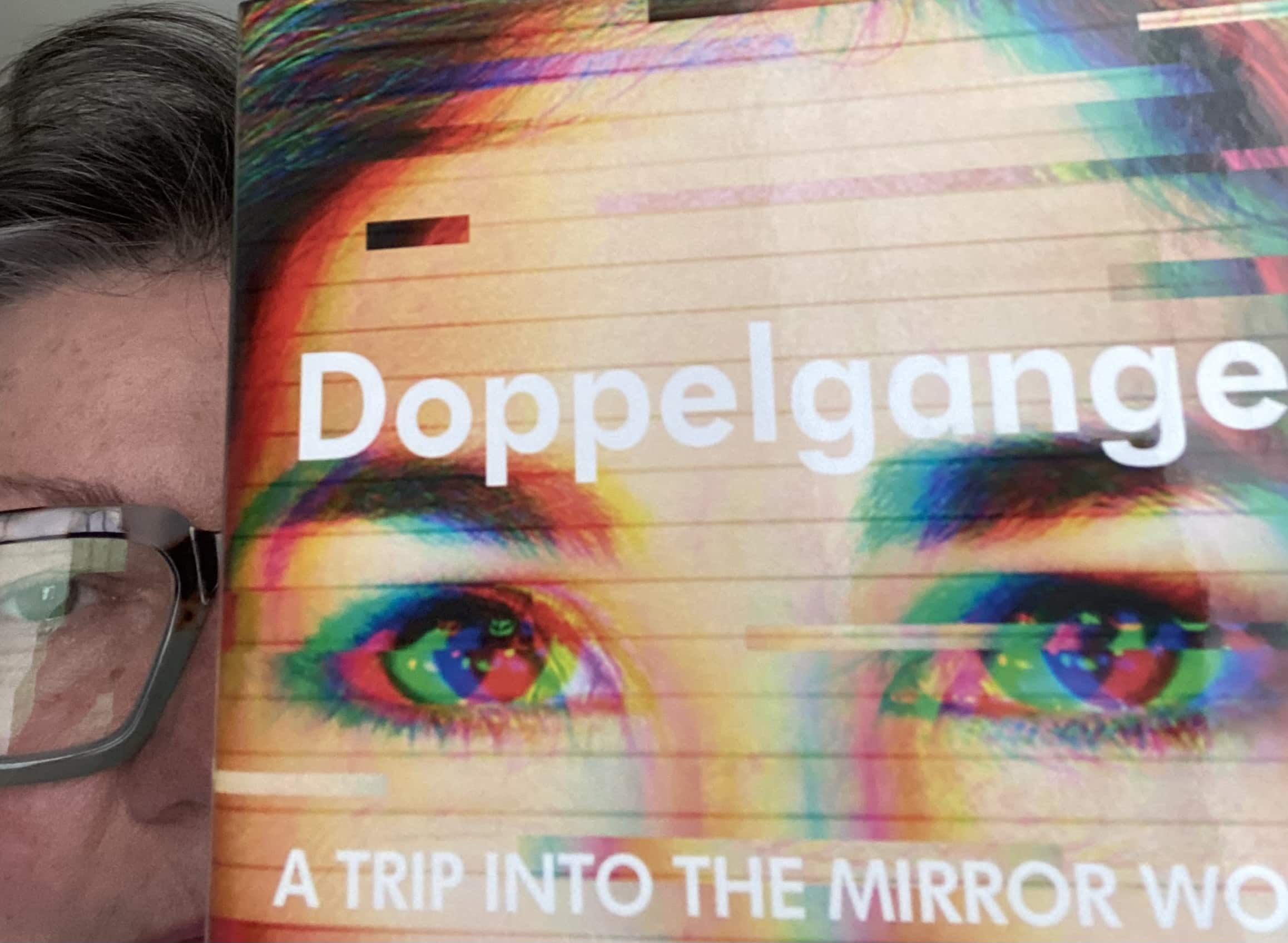
The Grim Reader: Naomi Klein’s Doppleganger


Is Doppleganger the right book to add to The Grim Reader series? It has a breadth and scope that is deeply necessary. It is personal. It is political. It gives voice to all kinds of issues from our ecological crisis to rising fascism. So, yes.

On the surface, the book is about the unfortunate mix-ups Naomi Klein has had to endure between herself and Naomi Wolf. Wolf used to be a well regarded feminist academic, but at some point, she took a turn in another direction. The book that brought her widespread attention, The Beauty Myth, was good. Although it didn’t add anything new to the understanding of how beauty is used to hold women back (this was already well trodden ground), Wolf was a new, young, and welcome voice on the scene and gave the argument a new (and beautiful) face. I used her work when I taught Women’s Studies at the college level.

Meanwhile, Klein, became a well known feminist progressive, environmental activist and political activist. She is the writer behind No Logo and The Shock Doctrine. She tried for years to shrug off the mix ups between the two Naomis. Although harmless at first, as the years wore on, Wolf veered into territory that was anathema to Klein and mix ups became more embarrassing. Over time, Klein became interested in (and possibly obsessed over) how someone like Wolf could change her world views so radically.

Klein’s exploration into Wolf’s transformation brings her to a profound book about mirror images, doubling, or doppleganging. In a way, Doppleganger is a book about how we all contain multitudes. If you’ve ever asked yourself how your Uncle Jim or your mom or someone who you used to know as a great helper-parent in your neighbourhood school or volunteer at the food bank became a FOX News watching, conspiracy-minded, MAGA hat wearing, flag waving, vaccination fearing, Pierre Poilievre supporting, maybe even gun-toting, freedom screaming, convoy supporter, this book is for you. It actually helped me understand how it happens.

I have to admit that even I mixed the two Naomis up, a fact that I am embarrassed about now. I had thought that the incredible foundational error that Wolf made in writing one of her books, Outrages, was an error Klein had made in one of her new books. Oops. But because, in my mistaken mind, it was Klein, I shrugged it off as an “everyone makes mistakes” moment. It did not, to me, change anything about the brilliance of her earlier books, No Logo or The Shock Doctrine. But now that I know it was the other Naomi, can I extend the same grace to Wolf and say that this big mistake she made doesn’t change anything about The Beauty Myth? 

Sure. I guess.

It’s definitely harder because of Wolf’s turn to the right and the new company she keeps, like Steve Bannon. But it is important to give people like Wolf a little grace. How else can they come back?

One of the things Klein finds is that the difference between herself and Wolf and their increasingly divergent ideas is the difference between having a world view that is community oriented versus one that is more individually focussed. As Wolf’s shine wore off, she was all about finding another platform on which she could remain a darling. And find it she did. As a sociologist, I appreciate Klein’s observation that individual goals lead to different outcomes than more community-minded goals. I might even rephrase it to say that the difference between being Naomi Wolf or Naomi Klein is that Klein has a sociological imagination (with thanks to C. Wright Mills) and Wolf does not, or at least, does not anymore.

Klein writes, “These doubles share one thing in common: all are ways of not seeing. Not seeing ourselves clearly (because we are so busy performing an idealized version of ourselves), not seeing one another clearly (because we are so busy projecting what we cannot bear to see about ourselves onto others), and not seeing the world and the connections among us clearly (because we have partitioned ourselves and blocked our vision). I think this, more than anything else, explains the uncanny feeling of our moment in history–with all of its mirrorings, synthetic selves, and manufactured realities. At bottom, it comes down to who and what we cannot bear to see–in our past, in our present, and inthe future racing toward us.” And in ourselves. We all have an authoritarian toddler within us screaming for control. Most of us learn to get past that and live with others in a society working towards mutual benefit.

It is that simple. And that complex. And the road Klein takes herself on to get herself and her readers here is fascinating. Quoting prison abolitionist Mariame Kaba, Klein reminds us “Everything worthwhile is done with other people.” And we are going to have to understand all kinds of people to do anything worthwhile.

On a personal note:

I read Doppleganger while in the midst of a critical health crisis. I started reading it at home, had it with me for a week in the hospital and finished it when I got home again. In that period, I had been told my illness was terminal. Then the doctors found a way to save me. I post this two months later, after three more hospital stays, one of which included open-heart surgery. The fact that I can be (hopefully) cogent again is promising. I have yet one more very difficult surgery ahead and my current hospital stay will not be my last.

All of this is happening in a time when SARS-CoV-2 has been allowed to run rampant, as though it isn’t a killer disease, a disease that can affect every organ of every body, a disease that is chronic for many, a disease that is the source of a mass disabling event. I navigate this while trying to deal with my own non-covid related situation. Mitigations have been dropped in favour of keeping a society looking “normal,” that is, like it is 2019. As though we can choose the changes that happen around us constantly and reject some of them. As though we can keep our heads in the sand.

As of April 8, 2024, there is no longer a mask mandate enforced in BC hospitals. Some of my own doctors don’t wear masks and it makes me wonder if I can trust their medical knowledge. But the demands of capital have won out over the needs of sick people. It all became political and public health is now a joke, existing in name only. This is also considered within the pages of Doppleganger.

What’s happening to me personally is life and death. What’s happening to all of us collectively is life and death. The trend towards authoritarianism, the casual eugenics, (well, it’s ONLY those with co-morbidities that are dying, it’s ONLY the frail and elderly, it’s ONLY the disabled) and the genocide(s) taking place across the world are all related. Klein knows this. She looks at Hitler’s Germany, and specifically the life’s work of Hans Asperger who went from being someone trying to help children who were a little different live full lives to someone who was selecting which “disabled” children would die within the Nazi’s genocidal machine. Klein  writes, “Asperger’s jarring career trajectory demonstrates that, in just a handful of years, the same institutions and some of the very same people can shift from an ethos of care and curiosity toward a vulnerable group to one of callousness and genocidal cleansing. As if a switch has been flipped.”

I’ve noticed this with a lot of people throughout the pandemic. So has Klein. The admittedly weak and nascent efforts at community protection we saw in the beginning of 2020 completely turned around. Now wearing a mask or getting a vaccine is thought of as a bad thing by an apparently vast swath of people. Or maybe they are a particularly loud minority. Whoever they are, they have won. Protecting each other is a long-gone ethos. She cites examples of people on the vaccine-feaing, invermectin-promoting side saying the weak should die. And as a person who is now one of the weak, effectively barred from participation in much of society because no one is willing to wear a mask anymore or put any effort or resources into creating cleaner indoor air, I can tell you, it sure feels eugenic to me. As I mentioned above, even my own doctors don’t always wear masks. I’m sure they care about me (at least abstractly) and they have put a lot of their skill and effort into keeping me alive, but they just don’t see how careless they are.

Caring and careless. At the same time. For example, I have no doubt that some of those same people who were banging pots and pans in support of health care workers in early 2020 wouldn’t deign to put a mask on to save the health and life of a health care worker today if they had to go into their doctor’s office or to the hospital. Nor will they wear a mask to save their own life. Or mine. In short, we are “both this and that.”

And this is the key realization of Klein’s opus. Both individual people and even states can be “victim and victimizer at the same time.” One of her most extraordinary and helpful conclusions is that what makes the difference between going “there” and not going “there” is one’s attachment to a sense of community or society and an understanding of class. My sociologist soul rejoices at this conclusion.

Klein writes, “The disability justice advocate and author Beatrice Adler-Bolton refers to the mindset that has animated so much Covid denialism as ‘deaths pulled from the future’–which she defines as the judgement laden posture that frames ‘deaths from Covid-19 as somehow preordained’ because the people doing most of the dying were probably going to die prematurely anyway. Covid just moved up the timelines a few years, so what’s the big deal?” Klein states clearly, “this is fascist thought. More specifically, it is genocidal thought. It recalls the ways in which colonial massacres were rationalized because within the ranking of human life created by pseudoscientific racists, Indigenous peoples, such as the original residents of Tasmania, were cast as ‘living fossils.’ … Indigenous peoples were, in this telling, the pre-dead, with extermination merely serving to accelerate the inevitable timeline.”

I am not keen on being shunted aside as the pre-dead. I’d appreciate being able to keep every day I might have to experience this troubling body and all of the joy and love it is capable of manifesting.

The planet itself and our eco-systems are disabled now. Should we push up the timeline of our destruction of the earth because we are doomed anyway? Of course not. Our work must be care-based in this “time of planetary shocks and layered disasters.” Our most prevalent state is “chronic impairment,” says disability rights theorist Sunaura Taylor. Klein quotes her saying, “As a disabled person I recognize this as disability… What we live with in the present and will for decades to come, even under the best-case scenario, is mass ecological disablement of the more than human world, a disablement that is utterly entangled with the disablement of human beings. Given this, it seems vital to consider what forms of care, treatment and assistance this age of disability will require.”

On the final page of Doppleganger, Klein writes, “Negotiating that doubling [that is, the doppleganger]–between our younger selves and our older selves, between our public selves and our private selves, between our living selves and our dying selves–is part of what it means to be human.” My living, disabled self has a huge stake in all of it.

This is where Doppleganger lands for me. The mini-thesis inside the bigger thesis is about disability. I am in my age of disability in a world that is already disabled watching another mass disability event play out among humans during the sixth great extinction. I watch these events through wildfire smoke and sometimes through a hospital window. While there are still hospitals. There is something powerful and necessary about facing what’s real. I think constantly about words like accessibility and inclusion. I think about what they mean for me, for the forests. I think about what it means to truly respect every living thing, as it is, to know that it has an inherent purpose all of its own, even when damaged. Naomi Klein is still thinking about this. Her Doppleganger is not.

Read Dopplegnager. Tell me what you think.


An open letter to my health care providers: you are irreplaceable.

As you know, I’m in a health crisis. You are one of many professionals who are applying their skills, expertise, experience, and knowledge to helping me get through this. I appreciate you more than words can convey. Your care is the difference between life and death for me.
And I’m worried about you.
Many of you are not taking the pandemic seriously. You act like it is over and talk about it in the past tense. Covid, that is SARS-CoV-2, is a Level 3 biohazard, like tuberculosis. It is spread through the air like smoke. Once you get it, it often presents as a cold or flu, but it is so much more. It is a vascular disease. It potentially affects every part of your body, every organ (including your brain), your blood, and your immune system. It has long-lasting effects that we are only beginning to understand. There are a plethora of peer reviewed studies examining the harm that Covid can cause. For years now, some have suggested Long Covid could be a mass disabling event. It already is. Over three million Canadians have already experienced symptoms of Long Covid. Many people with Long Covid cannot work. The first major study of doctors with Long Covid in Britain reveals it has impacted the respondents’ ability to work and to carry out regular day-to-day activities. Almost one in five said they were no longer able to work because of their post-covid ill-health.
You are around sick people all the time. I urge you to wear a good mask, that is, a respirator. Yes, it would help me, but again, I am also worried about you. You are so important. So few people can do what you do. It takes years of training and practice and hard work. You studied for years to be able to do this. Your knowledge is so needed right now. And you are irreplaceable. Irreplaceable.
I have conversations with those of you who are obviously dedicated to protecting yourselves from Covid. You wear respirators and some of you wear face shields too. I appreciate the care you are taking. Some of you only work nights now or take only occasional shifts. Some of you have left full time employment. This is a huge loss for those of us who need you, but I understand. And I support you. It is safer. As one of you said, you have to protect yourself and your family.
Some of you wear the masks that your employer provides. They are better than nothing, and I appreciate the effort. But often they are not N95. They are not respirators. Maybe your employer, the health region, the hospital, the doctor’s practice, could provide better respirators.
Even though in my region, there is currently a mask mandate in all patient areas in hospitals, everyone behaves differently. Some of you introduce yourself and take a breath, peel off your mask for a second so I can see your face, and put your mask back on. I understand why you are doing that, but you don’t have to. I can see what’s going on in your eyes.
Some of you, particularly those at intake desks, still think being behind a clear plastic barrier is enough. It is not. Air travels over, under, and around these barriers and Covid travels in the air.
Some of you pull down your mask when we get into an important conversation, a life and death conversation, or when you are trying to make sure I understand you. Don’t worry: I can understand you through your mask.
Some of you wear masks in the hospital but not in your offices.
Some of you don’t wear them at all.
Masking is a vital part of infection control. It is a vital part of protecting yourself.
You are irreplaceable to me, as your patient, and to your other patients. There is no one else who knows what you know the way that you know it. No one else has your exact experience.
You are even more irreplaceable to your families and your loved ones. Irreplaceable.
I’m going to say something wild here: I love you. All of you. Even the bossy nurse whose poor mask wearing set the tone for the rest of the medical staff in that unit and left everyone less safe. Even you. You obviously have skills. You were the one who got everyone’s questions. You were the one who knew how everything worked. You are so important. We can’t lose you. Please, wear a mask. You are needed. You are irreplaceable. You are loved.
With gratitude and respect,
Your patient,
Jane

Oh My Heart—And Yours

I recently received inevitable bad news. Twentyish years ago, when I was treated for cancer, I had chemotherapy and radiation. Everyone thinks chemo is hard (and it is) but radiation is also a very big deal. Radiation affected my heart and lungs. I have worked hard over the years to keep my cardio strength up. But I can’t keep ahead of it anymore. Radiation has calcified my aortic heart valve. I will undergo open heart surgery in the spring to replace it.

(I’m begging you, please don’t send medical advice.)

I’m ok. I’ve always known this was a possibility. I plan on living through it. I’m grateful to all the people who gave me this last twenty years. I got to see my wonderful child grow up and become the most superb adult.

And let’s face it, when I’m given that long list of side-effects and asked if I understand, what I hear is “Do I want to die now or later?” My answer is always, “Later.” I have a feeling I’m about to sign off on another bunch of those.

I have things I say about this turn of events. “The chickens have come home to roost,” is one. When I’m feeling slightly bitter, I might say, “Cancer: the gift that keeps on giving.” And now, a new one via my friend Marnie, whose parter has had open heart surgery twice: “It sounds dramatic, but remember, for the surgeon, it’s their Tuesday morning.” Good perspective. Thanks for that, Marnie.

I will stay in the hospital for seven to ten days. There are a lot of things to worry about and contracting covid shouldn’t be one of them. Currently, there is a mask mandate for hospital workers in my jurisdiction, but who knows if it will still exist in the spring.

I honestly don’t know what kind of monster would visit a cardiac ICU without a mask on. Or any part of a hospital.

Can you imagine having that covid cough after your sternum has been cracked open? I can’t.

This is where you come in.

I hear people lamenting the state of the world. It is lamentable. They ask, “What can I do?”  Whatever the issue is that you are lamenting, the answer is to take action. Action (hopefully informed action) fends off depression, for one thing. It’s great for that. It gives you a sense of control and gets you out of your own head, often because you are helping other people.

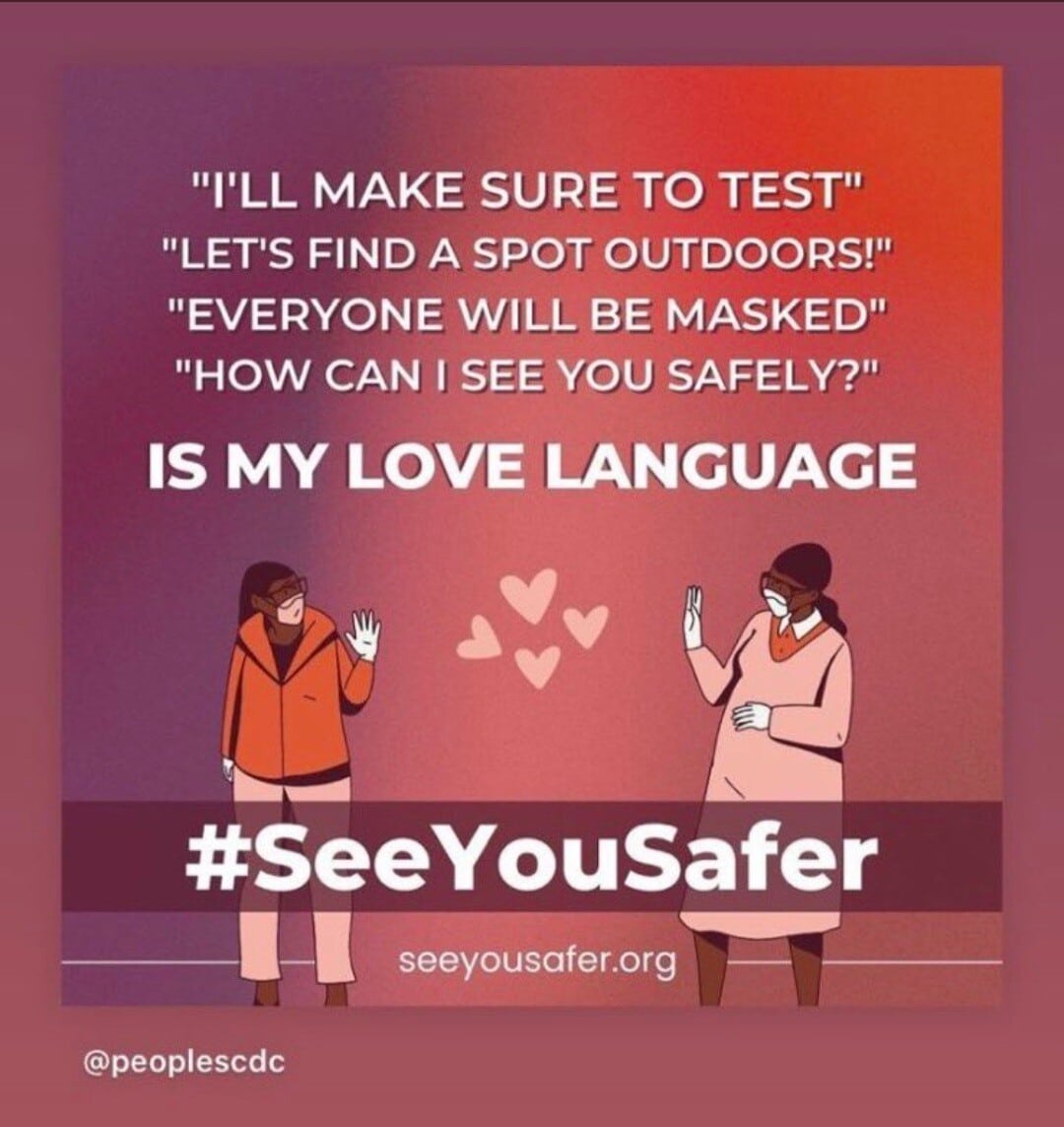
If you are concerned about the suffering and sickness all around you, the first and easiest action you can take to lessen it is to wear a mask. I’m going to say something harsh here. Get ready. If you are not willing to wear a mask, take a hard look at yourself. You really don’t care about the sickness and suffering all around you.

I cannot think of a situation that is not made worse by the pandemic and that would not be eased if SARS-C0V-2 were brought under control. Palestinians are getting covid while being bombed to near oblivion. But if genocide is your goal, covid is your helper. Climate disasters are made worse by people getting covid. Any illness or weakness you have lurking in your body is made worse by this vascular disease that can affect every organ in your body, including your brain. The decimation of your immune system means you will be sick more often. These are all known things. Get your head out of the sand and do some reading.

I’ve been wearing a mask since the beginning. It’s part of my life now. It is my normal. It is me, living with covid.

I am no longer willing to cut people with privilege and means any slack on this. If you are unaware of the criminal obfuscation going on around the airborne nature of this disease by public health and our so called leaders, it is because you don’t want to be aware of it. That’s on you. I wash my hands of you (knowing that hand-washing doesn’t do much to stop covid.) And if you are one of those public health people or alleged leaders, start doing your job. Start with distributing free masks. Then work on cleaning indoor air in public spaces you are responsible for.

I’ll still be active here. I’ll continue to talk about covid, about this new foray into the heart of me, and I’ll carry on with The Grim Reader. The pandemic and covid are conjoined twins of disaster. It’s important we keep trying our best.

And for those of you who will newly mask or mask again, thank you. For those who never stopped, thank you. We are all connected. We can’t ever forget that.

Living is hard work when you’re dying.

My friend is nearing the end of her life. I owe her so much. She is the person who taught me how to think.

I have so many feelings about it and everyone is worn out, I don’t want to burden the world with this. So, I’ll put it here, in my never read blog.

I was in my 30s when I met her. I foolishly thought it might be too late for me to do something different. She gave me examples of women who had done what I was trying to do, who had done it successfully. She gave me courage. She is whip smart and so generous. She loves to laugh. She loves playing games. She loves good food and fun company. She loves a cause. She loves justice and fights for it. She has the most diverse group of friends of anyone I have ever known. She attracts light.

Now I make her dinner. I am one of many who do this for her. She has a huge network of people who love her and help her, a sure sign of a life well-lived.

But we are in a pandemic. She cannot be with her people like she wants to. We cannot play games together. We see each other with masks on. Her beloved son and grandchildren live far away, in another country. She still cannot get her second vaccine. She is told she has to go to the mass vaccine site she went to for the first. She will need help and a wheelchair. Another friend is helping with this very practical matter. Will it happen in time?

What she wants more than anything is more time. Time with her grandchildren. She wants to hug them. She even wants to hug me and how I would love to hug her back. It is heartbreaking.

What she does not want is sympathy. These days, it is hard not to send it out to her over my mask. She sees it in my eyes. I catch myself. I offer her practical help. This is what she wants from me. So this is what I give. I honour her by doing what she asks of me, and she honours me by asking.

When my mother was dying, right at the very end, I realized I had thought of her as dying while she was still living. We label people as dying too soon. My friend is still living and her life is very hard right now. The grief of this time overflows.