Category Archives: First Person

To Mary Oliver, in gratitude

Why do we wait until someone dies to express our gratitude to them? Oh, Mary Oliver, I should have written you a letter.mary oliver

I’m not “good” at poetry. I’ve read it and taught it and tried and tried, but I don’t think I have a poetic spirit and then I read someone like Mary Oliver. I can’t say what it is about her poetry that I love. I can open any Mary Oliver volume any day on any page and find something consoling and inspirational. She is always there for me, on my bookshelf, ready to help.

A lifetime ago I was working with a school board and I was asked to deliver a graduation speech at a program for students who were pregnant. They were segregated, and although I recognized the possible need for their segregation, their difficulties in conforming to a regular school schedule and so on, I also felt it was simultaneously terrible. Maybe it was because I grew up in an era when teenage pregnancy was the height of disaster and I didn’t like the idea of these young women being hidden away, if that was what was happening. I thought about that group of young, expectant mothers, and I could not know if they felt supported or judged or somewhere in between. I could not know their future, but I knew I couldn’t make assumptions. Maybe it would be harder than mine was at their age. They would have a child. Or maybe it would be more joyful than mine was at their age because of that same child. Realistically, they might be facing economic hardship, struggle to find work and child care, they might be single parents. It was hard to know what to say.

I turned to Mary Oliver. As always, she knew what to say when I didn’t. I read them, “Wild Geese,” and even now, when I think about that poem in that context, I get teary. Oh, Mary Oliver, thank you for the words.

Today, I open the book Swan: Poems and Prose Poems to the prose poem, “Don’t Hesitate.” The first line reads, “If you suddenly and unexpectedly feel joy, don’t hesitate. Give in to it.” I am sad you are gone, Mary Oliver, but so joyful that you lived. Why do I feel that just maybe my gratitude to Mary Oliver is not too late? Why do I feel that she still might know? Why do I feel that she is flying above me, like the Wild Geese? “Don’t Hesitate” ends with the line, “Joy is not made to be a crumb.” No, it is not.


“The Hidden Life of Trees” and Learning Patience

Walking to yoga yesterday, I had one of those irritating interactions with a driver who seemed to think it was taking me too long to cross the street. The driver lurched forward at our four way stop, I jumped back off the road and made eye contact, the kind of eye contact that says, “What do you think you’re doing?” She made the kind of hand motion that says, “Get on with it then,” and I did not break eye contact with her until I crossed through to the other side of the yellow line. She gunned it and passed behind me well before I was safely on the other sidewalk. And I thought about patience. Actually impatience first, and then patience.

I have a strong reaction to impatience. My father was impatient and sometimes volatile. One Saturday morning, I was in our basement rec room, a masterpiece of 1970s wood-panelling and red carpet, listening to my new album over and over on our single speaker record player. It was K-Tel’s “Fantastic.” (Mock me if you will, but you are mocking an eleven-year-old.) My father was in the back part of the basement, the unfinished part where he kept his workshop and tools. He was doing something that obviously wasn’t going too well. He opened up the door to the rec room, red with fury, took my record off, broke it in half over his knee, went back into his workshop and slammed the door. When I encounter impatience, I feel just like that eleven-year-old girl. I had no examples of patience as a child. It has taken me a lifetime to learn.

9781771642484

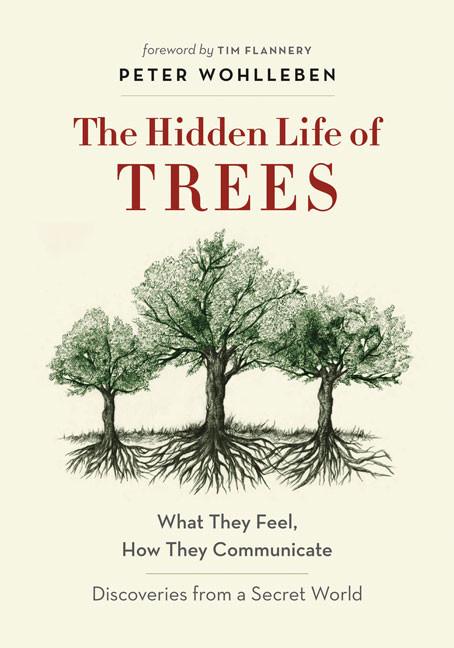
I need patience to read now. I’m reading about trees again. This time it is Peter Wohlleben’s The Hidden Life of Trees. I’ve been reading it, or trying to read it, for well over a year. I’ve started it four times and am currently on page 62. Again. It is great, but dense, and the kind of reading that is the most challenging to me as I continue to recover from my concussion. Trees are models of patience. They live in slow motion compared to us. Their actions take time. According to Wohlleben, they might even be called conscious actions. They might even be communicating with each other. And if we knew how to listen, they would be communicating to us. When I am frustrated by my slow reading, I think about the trees I’m reading about and find my patience again. Like Wohlleben, I am most at peace in a forest. Even if I can’t be in the forest at this moment, reading about it is the next best thing. I can imagine the smell of a stand of Douglas Fir and transport myself there. My own free Forest Therapy.

In yoga, we do tree pose. I think about the trees, their roots, their silent (to us) communications to each other. I balance my weight across my foot, try not to wobble. I have my drishti, my gaze on something unmoving, and I am, for a second, one with the trees. Then my mind wanders to the driver and I fall out of the pose. I don’t know why she was impatient. We are all fighting our own battles and I don’t know what hers are. I hope she finds some calm in her day. I return to the pose. I fall out again. I try again.


Today’s featured book: Peter Wohlleben, The Hidden Life of Trees. Vancouver: Greystone Books. 2015.


Recovery, Reframing, and Gratitude for 2018

Happy New Year. 2018 will be the year I recover from this concussion. I know, I know.  I said the same in 2017, and that came and went in a concussed fog. Don’t make promises you can’t keep, says someone in the back of my rattled brain. I’m ignoring that person, choosing optimism and saying this will be the year.

When this happened, way back in 2016, I couldn’t have imagined the time between then and now. My former GP told me dismissively that I would recover in three weeks. So I pretended I was fine and tried to carry on. I pushed and pushed until I couldn’t anymore. I remember thinking, “What is wrong with me?” and going into a blind panic amid the clangour.

What does recovery even mean? It’s a process, not a destination. I know now that it does not mean I will be like I was. There’s no going back. Time only moves forward, and so must I. But I will be something else, somebody closer to normal (whatever that is), somebody who doesn’t worry about falling sideways in the supermarket. I hope I’m somebody who can read quickly and deeply again, who can assimilate information, who can remember, who can write creatively, who can think creatively, who can understand a metaphor, who can ride a bike. I hope I am all of those things. And more. I hope I sleep soundly again.

I have been negative about 2017. The lost year, I call it. But it is time for a reframing. I accomplished something. I pursued my recovery. I followed up every lead on practitioners and treatment and completed every treatment plan given to me. I did puzzles and mazes and built with blocks meant for six-year-olds. I memorized patterns and tested my memory in thirty second intervals and two minute intervals and now a little longer than even two minutes. I filled in the pages of cognitive treatment work books. I budgeted my energy, learning over and over from my mistakes. I wore special glasses and eye patches and learned to see again and to focus and refocus close up and in the distance and every point in between. I regained my lost peripheral vision. And I read, doggedly, even when I couldn’t read, even when I had to use a ruler to follow the lines, even when the words swam on the page and pretended to be words they were not. I read something (anything) every day because I knew that to get my life back, I had to be able to read. And I wrote, little bits, tiny posts on social media, or here on my website. They took forever, but I tried to keep my hand in it any way I could. I launched a book, which I could not have done without Elaine (dear Elaine) but it got done. And then after my brain learned to understand my eyes again, I went to driver rehabilitation and got the go-ahead to drive. I still have huge anxiety in the car, but being told that I have the cognitive capacity to drive is a big step forward.

Creative writing is still elusive. The novel, almost finished in January 2016, remains where it was. Novels are big, you know? There’s so much to remember. So much logic and sequencing and so many words, words, words. Reading remains the second-most difficult task I have. To write, I have to be able to read. They are inseparable tasks. I acknowledge that there is improvement. I don’t need a ruler anymore. The words don’t jump around. I can read for twenty minutes or more most days without getting a headache. I still mix up meanings sometimes. I’m still extremely literal. But it is so much better than it was. Now I’m concentrating on concentrating, trying to build my capacity again.

I had (and continue to have) help. Lots of it. I heap special praise upon my neuro-optometrist, who really, truly, listened to what I was experiencing and didn’t look at me like I was crazy. She had seen this before. It was real. I was so grateful. I have a wonderful new GP, who, although she sees a thousand patients, is always able to make me feel like she has time for me. And I don’t want to forget the massage therapists and physiotherapists, a naturopath, a neuro-psychologist, an occupational therapist and a lawyer who helped me navigate the insurance and the crap I need to do to pay for it all. I thank them all.

I spent too much of my time in 2016 and early 2017 pretending I was fine. I wasn’t honest about how difficult it was to see friends or go on a simple outing. Some friends, close friends, knew and understood. They saw me cry, saw me fall apart, saw me have to disappear for a sleep like a cranky toddler. Thank you. People I know who face chronic illness gave me words and insight that helped. I can’t remember the past twenty months closely enough to give you all proper attribution. You know who you are and I am so grateful to you.

I am so grateful for my husband, whose life has also been curtailed by my brain injury. He has been patient and kind and encouraging. My daughter has too. She also had a big injury in 2016 and she was my recovery buddy for a long time. She’s all better now. She visited for the holidays and one day when I was out with these two cherished souls, I completely lost my equilibrium. My world slid down and to the right where I could not make sense of it. It lasted a long time. Too long. It’s a worry. But there they were, unconcerned about abandoning our plans and ready to take me home instead. It’s good to have people in your life who are with you, no matter what.

And I’m grateful for social media too and the friends I connect with there. Last January was a terrible time for me. I was standing at the edge of the abyss. I fought it back. I cannot overstate the value of social media in helping me back away from the darkness. It allowed me to connect with people without actually having to deal with, well, people, and noise and light. It kept me tethered to the world. To all of you who have sent along an encouraging word, thank you.

So here’s to reframing, to 2018, to health, to family, and to friends.

For the record, I started this post January 1 and it is now January 3. Good God. How can it take this long? Oh yes. Reframing. What matters is I could do it at all. I’m grateful.

Tis the season to think about Food Banks

Canada’s first food bank opened in Edmonton in 1981. People were hungry and the social safety net had failed them. Capitalism had failed them. Government had failed them. Maybe schools and employers and families and neighbours had failed them. Maybe they had failed themselves. Whatever the cause, people were hungry. Families and their little children were hungry. And so, as often happens, churches and charitable agencies stepped in. Individuals made donations. A system of redistributing food was developed. Perhaps you donate to a food bank. Many of us do. CBC Toronto is having its giant annual food bank drive today. I hope they raise a ton of money. No one wants a child to go hungry, or at least no one I would care to know wants a child to go hungry.

BUT —

Food banks were originally going to be a short-term response to immediate need. Once the limitations and failings which had enabled hunger to exist were addressed, food banks would no longer be needed and would disappear. That was 36 years ago. More than a generation has passed and food banks are everywhere and still absolutely necessary. They are an institution.  To borrow a phrase of Jean Swanson’s, Vancouver’s tireless anti-poverty activist, we have substituted charity for justice.

Let that sink in a minute. We have substituted charity for justice.

If you are donating to a food bank this year, I truly applaud you. Could you do something else too? Could you work a little on the justice part of this problem? Pick a piece of the source of this massive issue to tackle. If you think capitalism is the problem, think about what you can do to reverse trends that have placed resources in the hands of some while impoverishing others. Get involved in a community garden. Read about food security. Decide how you can contribute to creating food security for all. There are lots of people who have opinions and thoughts about what to do. If you think government is the problem, ask your representatives what they are doing to alleviate hunger. We get tax deductions for our donations. Maybe we shouldn’t. I don’t know. I don’t know all the answers. I’m only one person and I can’t solve local hunger by myself, let alone global hunger. But that’s no reason to avoid drawing attention to the problem or taking one small action beyond a food bank donation.

Here’s a little reading list, a little food for thought.

George Monibot, “Everything Must Go.”

Art Eggleton, “Three Ways to End Poverty in Canada.”

Canada Without Poverty. “Human Rights and Poverty Reduction Strategies.”

Jean Swanson, “Poor-Bashing.”

Elaine Power, “It’s Time to Close Canada’s Food Banks.”

Feel free to add other helpful reading materials in comments.

Existential Angst and Obama’s last 2016 Press Conference

I couldn’t watch it all. I’ll admit it. It was too sad. For all the reasons you expect. The world says goodbye to an ethical, rational, even-tempered leader who feels deeply the responsibility of his office. Too soon, we will say hello to an unethical, narcissistic sexual predator who does not even know the responsibility of his office.

I could practically feel the weight of the world on his shoulders. Yes, he feels responsible for everything. We know it keeps him up at night. Aleppo, Sudan, the plight of his own fellow-citizens, soldiers at home and those sent far away, their families, the lives of children around the world.

Meanwhile, the new guy stays up at night worrying about SNL. Worrying about himself. His own image.

The contrast could not be more stark.

Although we might not have always been in agreement, expecting to be is irrational. I’m not always in agreement with my own husband, let alone the leader of the free world. I’m not even American. He made unpopular decisions. It is an inevitability of the job. Yet, I have faith that he did his best. I have faith that he put the smartest people he could find in the room and listened to them.

It was sad to watch him, repeatedly, lay out a series of facts and then ask the press to draw their own conclusions. But that wasn’t good enough. They wanted hyperbole. They weren’t going to get it. They tried again. They wanted him to name and blame Putin. Nope. He wouldn’t do it. Well, they’ll have their hyperbolic president soon enough. Let’s see where it gets them.

But even all of this is not the real reason for my sadness. The real reason is that I felt Obama was talking to a nation that isn’t there anymore. The rational, the bipartisan, the people who talk to each other about their own lives, about politics, about important national and international issues over the mythical back fence, in the apartment lobby while picking up mail, or while waiting in the car-repair shop or in line at the grocery store—these people don’t exist anymore. They’ve been replaced by—what? By something else. And I felt myself as part of the past, a relic of a progressive era that was already dying when I was in high school and Reagan was elected. I felt the hopelessness that Obama warns against.

He says not to curl up in a fetal position. But I think I’ll have to. I’ll need to stay on the couch a little longer and think about it all, feel the truly existential angst of it.

I’m sure I’ll get up. Sure of it.

Meanwhile, I’ll re-read Ta-Nehisi Coates beautiful elegy to Obama. That is some writing to love.

Susan Faludi’s Backlash is as Relevant as Ever

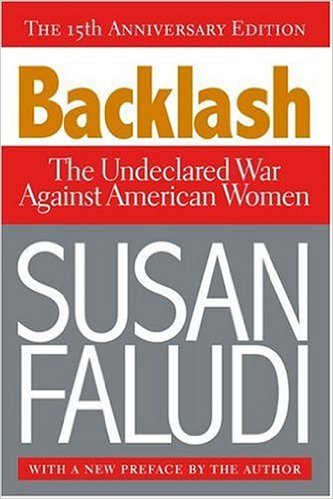
I am not surprised that at a time when the United States could elect it’s first woman President, there is a massive backlash against women and that her opponent is the personification of misogyny. Susan Faludi talked about this phenomenon in her ovumnal 1991 book, Backlash. This is a book that’s worth rereading now or reading for the first time. This cover image is from the 2006 re-release of the book with a new forward by Faludi. In it, Faludi says the backlash is over and laments that while there have been gains for women since 1991, “We have used our gains to gild our shackles, but not break them.”(xvi) backlash

But it’s not over. We’re living through it again now.

I’ve tried not to get caught up in the day to day debacles of election news. I’m trying to take the long view. In the long view, there is more at stake than simply who will be President, a Democrat or Republican. Americans have to ask themselves, will it be business as usual or will one more piece of the intersecting puzzle of oppression break? Will a woman, a qualified woman, a woman running against a uniquely unqualified man, a man so appalling he is a cartoon character, become President or will the cartoon character? If the cartoon character wins, so does the Backlash. Women will not have made a step forward, but will have taken innumerable steps back and with them will follow every other group seeking equity.

Faludi’s work tells us that the backlash is real, it can succeed and it does succeed. But it also shows us how desperately those who hold power will cling to their power, the measures they will go to, and how, as their desperation becomes increasingly apparent the more likely they are to lose. The backlash, in other words, is a good thing. It is evidence that we are winning.

Meanwhile, the rest of the world watches to see if the promise of America will hold or if we will be witness to another failure of the American experiment. Wouldn’t it be surprising if it were not unfettered capitalism or the open sore of racism, or even another expensive and failed military misadventure that brought America to its knees but if it were plain old sexism?

To be clear, I don’t want to see the US brought to its knees. I don’t want them to be made an international laughing stock. I’m quite fond of America and Americans and even lived there for a while. I want the American experiment to succeed. I’m cheering for the good guys. I want a US that says, “We’re working on it. Really. Here’s some proof. We elected a woman President. We didn’t let the most obviously misogynist (insert more adjectives here) man in the modern history of our country take charge. We strive to be better tomorrow than we are today.” After all, the American project is about the pursuit, isn’t it? It’s very nature is optimistic, and I want optimism to prevail.

So, rather than waste another second tracking the appalling antics of the man, why not go back to Susan Faludi’s book Backlash instead? It’s easy to apply her analysis to today’s events and gain some insight into why, exactly, the ground is shaking at this particular time in this particular way. I am convinced the revelations about the despicable man will continue so that even his most loyal backers are offered multiple opportunities to see clearly. If his race baiting didn’t open their eyes, then maybe his insults to people with disabilities might. Or veterans. If that doesn’t do it, then maybe his creepy sexual objectification of his own daughter will. If that doesn’t cut it, then maybe his business failures might. Something has to clear the film from their eyes. If that doesn’t flip the switch, maybe hearing him brag about sexual assault will. But rest assured, the opportunities for clarity are a gift and will be offered until they are no longer needed.

Or if you think Faludi is too old or too second wave or too (insert adjective here), spend your time reading more modern feminst analyses, those that are intersectional in nature. Here’s a list of blogs to get you started. It will do you a lot more good than watching another video of that man insulting someone and your intelligence.