“The Hidden Life of Trees” and Learning Patience

Walking to yoga yesterday, I had one of those irritating interactions with a driver who seemed to think it was taking me too long to cross the street. The driver lurched forward at our four way stop, I jumped back off the road and made eye contact, the kind of eye contact that says, “What do you think you’re doing?” She made the kind of hand motion that says, “Get on with it then,” and I did not break eye contact with her until I crossed through to the other side of the yellow line. She gunned it and passed behind me well before I was safely on the other sidewalk. And I thought about patience. Actually impatience first, and then patience.

I have a strong reaction to impatience. My father was impatient and sometimes volatile. One Saturday morning, I was in our basement rec room, a masterpiece of 1970s wood-panelling and red carpet, listening to my new album over and over on our single speaker record player. It was K-Tel’s “Fantastic.” (Mock me if you will, but you are mocking an eleven-year-old.) My father was in the back part of the basement, the unfinished part where he kept his workshop and tools. He was doing something that obviously wasn’t going too well. He opened up the door to the rec room, red with fury, took my record off, broke it in half over his knee, went back into his workshop and slammed the door. When I encounter impatience, I feel just like that eleven-year-old girl. I had no examples of patience as a child. It has taken me a lifetime to learn.
9781771642484

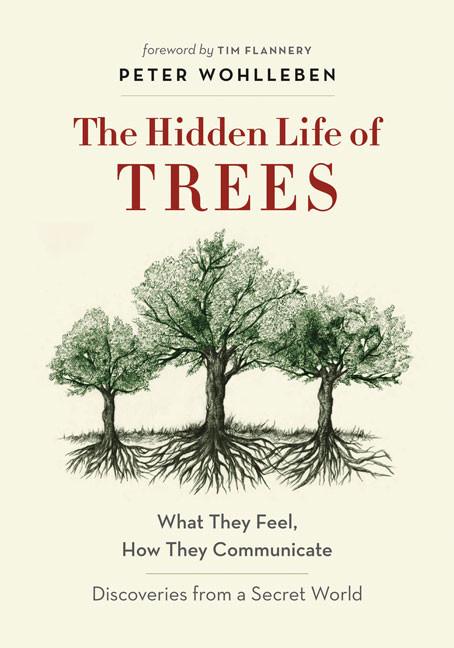
I need patience to read now. I’m reading about trees again. This time it is Peter Wohlleben’s The Hidden Life of Trees. I’ve been reading it, or trying to read it, for well over a year. I’ve started it four times and am currently on page 62. Again. It is great, but dense, and the kind of reading that is the most challenging to me as I continue to recover from my concussion. Trees are models of patience. They live in slow motion compared to us. Their actions take time. According to Wohlleben, they might even be called conscious actions. They might even be communicating with each other. And if we knew how to listen, they would be communicating to us. When I am frustrated by my slow reading, I think about the trees I’m reading about and find my patience again. Like Wohlleben, I am most at peace in a forest. Even if I can’t be in the forest at this moment, reading about it is the next best thing. I can imagine the smell of a stand of Douglas Fir and transport myself there. My own free Forest Therapy.

In yoga, we do tree pose. I think about the trees, their roots, their silent (to us) communications to each other. I balance my weight across my foot, try not to wobble. I have my drishti, my gaze on something unmoving, and I am, for a second, one with the trees. Then my mind wanders to the driver and I fall out of the pose. I don’t know why she was impatient. We are all fighting our own battles and I don’t know what hers are. I hope she finds some calm in her day. I return to the pose. I fall out again. I try again.


Today’s featured book: Peter Wohlleben, The Hidden Life of Trees. Vancouver: Greystone Books. 2015.
 

Anne Fadiman and Confessions of a Common Reader

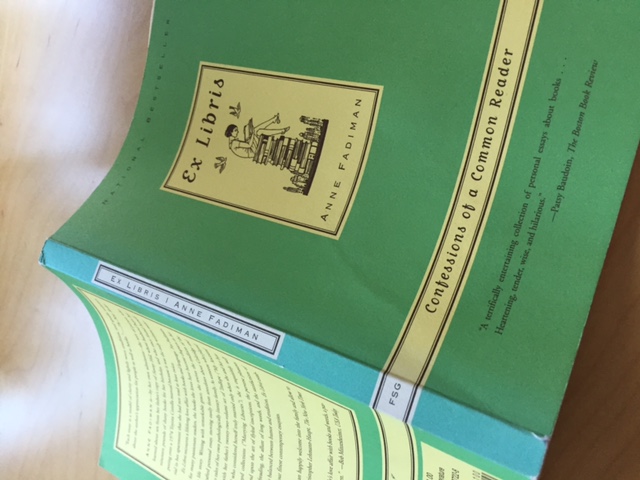
As part of my ongoing concussion recovery, I’m teaching myself to read again, an activity that I always found so joyful before and now find so daunting. I am generally re-reading. It’s easier, what with my memory the way it is now. Anyway, the trivialities of my self-initiated treatment plan aside, what better book to re-read than Anne Fadiman’s Ex Libris; Confessions of a Common Reader.  ex libris

In it are eighteen delightful essays about reading, about books, about personal libraries and about words by someone who is, I would say, an entirely un-common reader. Fadiman is the kind of person you see walking on the street devouring a book open in front of her. Her taste for reading was nurtured by her academic parents in a household stuffed to bursting with books. Her own writing is scholarly without being snobbish, a situation ripe for incidental learning. The book is full of factual tidbits so seamlessly incorporated into its text that I come away feeling as though I could hold my own at an English Department dinner party. The tone is friendly and confiding. Her vocabulary is vast and slants Victorian, which, to my mind, is an asset.

My copy of Fadiman’s book is slightly ruined in my own library – a little warped from moisture, a little dog-eared, and not without considerable underlining and marginalia. Her essay, “Never Do That to a Book” issues a solid approval of all of my mishandling of her work. She writes of her childhood in which she used her father’s books as building blocks and how her own children do the same with hers. She writes of people who eat books, literally digesting the words, and her own son’s consumption of the corners of Good Night Moon. It occurs to me that for Fadiman, the rating system for used books employed by on-line purveyors is entirely backwards. A five-star book condition for her would mean a book was stuffed with notations and worn pages and a “like new” book would not interest her at all. Her essay about inscriptions in books has left me changed forever. Never again will I just dash one off.

It is difficult to choose an essay to highlight. I love them all. Like all the best personal essays, each one touches the universal. We are not just reading about reading; we are reading about life and death, marriage and parenting, love and loss. Her description of the process that she and her equally bookish husband undertook to marry their libraries  describes both a marriage and a library for the ages. In a later essay, she explains how, after inheriting part of her father’s library, she kept it in separate book shelves at first and then changed her mind. Integrating his library into hers becomes a testament to how the people we love and lose become indistinguishable parts of our own lives. It is deeply reassuring.

If I had to choose a favourite, “Nothing New Under the Sun” might make the cut. It is a sly investigation into plagiarism that should be read by every teacher and every writer everywhere. The footnotes are screamingly funny. I would love to plagiarize it, but I won’t.

I remember exactly how I came to be in possession of this book. It was a gift from a dear friend, Arlette Zinck, a kindred spirit in reading, and I hope I thanked her appropriately at the time. If not, I do so again.

Lastly, as if these essays weren’t enough, Fadiman’s final pages include recommended reading (of course) – a bibliography of other books about books. It is marvelous.

Give yourself a treat and buy a copy, preferably from a dust-mote filled used bookstore, and curl up under a blanket. Lay it down, open and upside down, on your bedside table, pages splayed and dog-eared.

Fadiman, Anne. Ex Libris. New York: Farrar, Straus and Giroux, 1998.

Recovery, Reframing, and Gratitude for 2018

Happy New Year. 2018 will be the year I recover from this concussion. I know, I know.  I said the same in 2017, and that came and went in a concussed fog. Don’t make promises you can’t keep, says someone in the back of my rattled brain. I’m ignoring that person, choosing optimism and saying this will be the year.

When this happened, way back in 2016, I couldn’t have imagined the time between then and now. My former GP told me dismissively that I would recover in three weeks. So I pretended I was fine and tried to carry on. I pushed and pushed until I couldn’t anymore. I remember thinking, “What is wrong with me?” and going into a blind panic amid the clangour.

What does recovery even mean? It’s a process, not a destination. I know now that it does not mean I will be like I was. There’s no going back. Time only moves forward, and so must I. But I will be something else, somebody closer to normal (whatever that is), somebody who doesn’t worry about falling sideways in the supermarket. I hope I’m somebody who can read quickly and deeply again, who can assimilate information, who can remember, who can write creatively, who can think creatively, who can understand a metaphor, who can ride a bike. I hope I am all of those things. And more. I hope I sleep soundly again.

I have been negative about 2017. The lost year, I call it. But it is time for a reframing. I accomplished something. I pursued my recovery. I followed up every lead on practitioners and treatment and completed every treatment plan given to me. I did puzzles and mazes and built with blocks meant for six-year-olds. I memorized patterns and tested my memory in thirty second intervals and two minute intervals and now a little longer than even two minutes. I filled in the pages of cognitive treatment work books. I budgeted my energy, learning over and over from my mistakes. I wore special glasses and eye patches and learned to see again and to focus and refocus close up and in the distance and every point in between. I regained my lost peripheral vision. And I read, doggedly, even when I couldn’t read, even when I had to use a ruler to follow the lines, even when the words swam on the page and pretended to be words they were not. I read something (anything) every day because I knew that to get my life back, I had to be able to read. And I wrote, little bits, tiny posts on social media, or here on my website. They took forever, but I tried to keep my hand in it any way I could. I launched a book, which I could not have done without Elaine (dear Elaine) but it got done. And then after my brain learned to understand my eyes again, I went to driver rehabilitation and got the go-ahead to drive. I still have huge anxiety in the car, but being told that I have the cognitive capacity to drive is a big step forward.

Creative writing is still elusive. The novel, almost finished in January 2016, remains where it was. Novels are big, you know? There’s so much to remember. So much logic and sequencing and so many words, words, words. Reading remains the second-most difficult task I have. To write, I have to be able to read. They are inseparable tasks. I acknowledge that there is improvement. I don’t need a ruler anymore. The words don’t jump around. I can read for twenty minutes or more most days without getting a headache. I still mix up meanings sometimes. I’m still extremely literal. But it is so much better than it was. Now I’m concentrating on concentrating, trying to build my capacity again.

I had (and continue to have) help. Lots of it. I heap special praise upon my neuro-optometrist, who really, truly, listened to what I was experiencing and didn’t look at me like I was crazy. She had seen this before. It was real. I was so grateful. I have a wonderful new GP, who, although she sees a thousand patients, is always able to make me feel like she has time for me. And I don’t want to forget the massage therapists and physiotherapists, a naturopath, a neuro-psychologist, an occupational therapist and a lawyer who helped me navigate the insurance and the crap I need to do to pay for it all. I thank them all.

I spent too much of my time in 2016 and early 2017 pretending I was fine. I wasn’t honest about how difficult it was to see friends or go on a simple outing. Some friends, close friends, knew and understood. They saw me cry, saw me fall apart, saw me have to disappear for a sleep like a cranky toddler. Thank you. People I know who face chronic illness gave me words and insight that helped. I can’t remember the past twenty months closely enough to give you all proper attribution. You know who you are and I am so grateful to you.

I am so grateful for my husband, whose life has also been curtailed by my brain injury. He has been patient and kind and encouraging. My daughter has too. She also had a big injury in 2016 and she was my recovery buddy for a long time. She’s all better now. She visited for the holidays and one day when I was out with these two cherished souls, I completely lost my equilibrium. My world slid down and to the right where I could not make sense of it. It lasted a long time. Too long. It’s a worry. But there they were, unconcerned about abandoning our plans and ready to take me home instead. It’s good to have people in your life who are with you, no matter what.

And I’m grateful for social media too and the friends I connect with there. Last January was a terrible time for me. I was standing at the edge of the abyss. I fought it back. I cannot overstate the value of social media in helping me back away from the darkness. It allowed me to connect with people without actually having to deal with, well, people, and noise and light. It kept me tethered to the world. To all of you who have sent along an encouraging word, thank you.

So here’s to reframing, to 2018, to health, to family, and to friends.

For the record, I started this post January 1 and it is now January 3. Good God. How can it take this long? Oh yes. Reframing. What matters is I could do it at all. I’m grateful.

Tis the season to think about Food Banks

Canada’s first food bank opened in Edmonton in 1981. People were hungry and the social safety net had failed them. Capitalism had failed them. Government had failed them. Maybe schools and employers and families and neighbours had failed them. Maybe they had failed themselves. Whatever the cause, people were hungry. Families and their little children were hungry. And so, as often happens, churches and charitable agencies stepped in. Individuals made donations. A system of redistributing food was developed. Perhaps you donate to a food bank. Many of us do. CBC Toronto is having its giant annual food bank drive today. I hope they raise a ton of money. No one wants a child to go hungry, or at least no one I would care to know wants a child to go hungry.

BUT —

Food banks were originally going to be a short-term response to immediate need. Once the limitations and failings which had enabled hunger to exist were addressed, food banks would no longer be needed and would disappear. That was 36 years ago. More than a generation has passed and food banks are everywhere and still absolutely necessary. They are an institution.  To borrow a phrase of Jean Swanson’s, Vancouver’s tireless anti-poverty activist, we have substituted charity for justice.

Let that sink in a minute. We have substituted charity for justice.

If you are donating to a food bank this year, I truly applaud you. Could you do something else too? Could you work a little on the justice part of this problem? Pick a piece of the source of this massive issue to tackle. If you think capitalism is the problem, think about what you can do to reverse trends that have placed resources in the hands of some while impoverishing others. Get involved in a community garden. Read about food security. Decide how you can contribute to creating food security for all. There are lots of people who have opinions and thoughts about what to do. If you think government is the problem, ask your representatives what they are doing to alleviate hunger. We get tax deductions for our donations. Maybe we shouldn’t. I don’t know. I don’t know all the answers. I’m only one person and I can’t solve local hunger by myself, let alone global hunger. But that’s no reason to avoid drawing attention to the problem or taking one small action beyond a food bank donation.

Here’s a little reading list, a little food for thought.

George Monibot, “Everything Must Go.”

Art Eggleton, “Three Ways to End Poverty in Canada.”

Canada Without Poverty. “Human Rights and Poverty Reduction Strategies.”

Jean Swanson, “Poor-Bashing.”

Elaine Power, “It’s Time to Close Canada’s Food Banks.”

Feel free to add other helpful reading materials in comments.

Report: The Abortion Monologues in Kitchener Waterloo

The wonderful people at SHORE (Sexual Health Options Resource Education, formerly Planned Parenthood) put on a production of The Abortion Monologues and were kind enough to send me a report. This is from Carrie McNabb, who signs off her notes with “Yours in Choice,” which I just cannot tell you how much I love.

“Jane, I just wanted to share the results of our recent production of your show! We raised $1800 in ticket sales from this production and donations of $700 at the door, for a total of $2500 raised for SHORE Centre. Thank you so so much. There was a woman who was also honoured that evening with a “Champion of Choice” award. She spent every single day of the anti-choice campaign “40 Days for Life” standing outside of our local abortion clinic holding up signs like ‘We support your choice,’ ‘We respect you,’ ‘Pro-choice,’ ‘[and] I don’t regret my abortion.’ So I wanted to say thank you for writing such a beautiful piece. Every single one of the cast walked away from this production permanently changed. And we received such kind feedback the evening of our show of people telling us how balanced and thoughtful the stories were. It truly was a remarkable evening of theatre and we raised a lot of money for a good cause. Thank you from the bottom of my heart.”

No, thank YOU Carrie and all of the people at SHORE and all of your volunteers for all the fine work you do. It’s not too late to donate.


New Production of The Abortion Monologues

The fine folks at SHORE (that is Sexual Health Options Resource Education) in Kitchener-Waterloo, Ontario are producing The Abortion Monologues to raise funds for their good work.

The show will be November 4, 2017 at the Little Theatre in Kitchener-Waterloo. Contact SHORE for tickets or more information and if you are in the area, please support this work.

abortion_monologues_edit

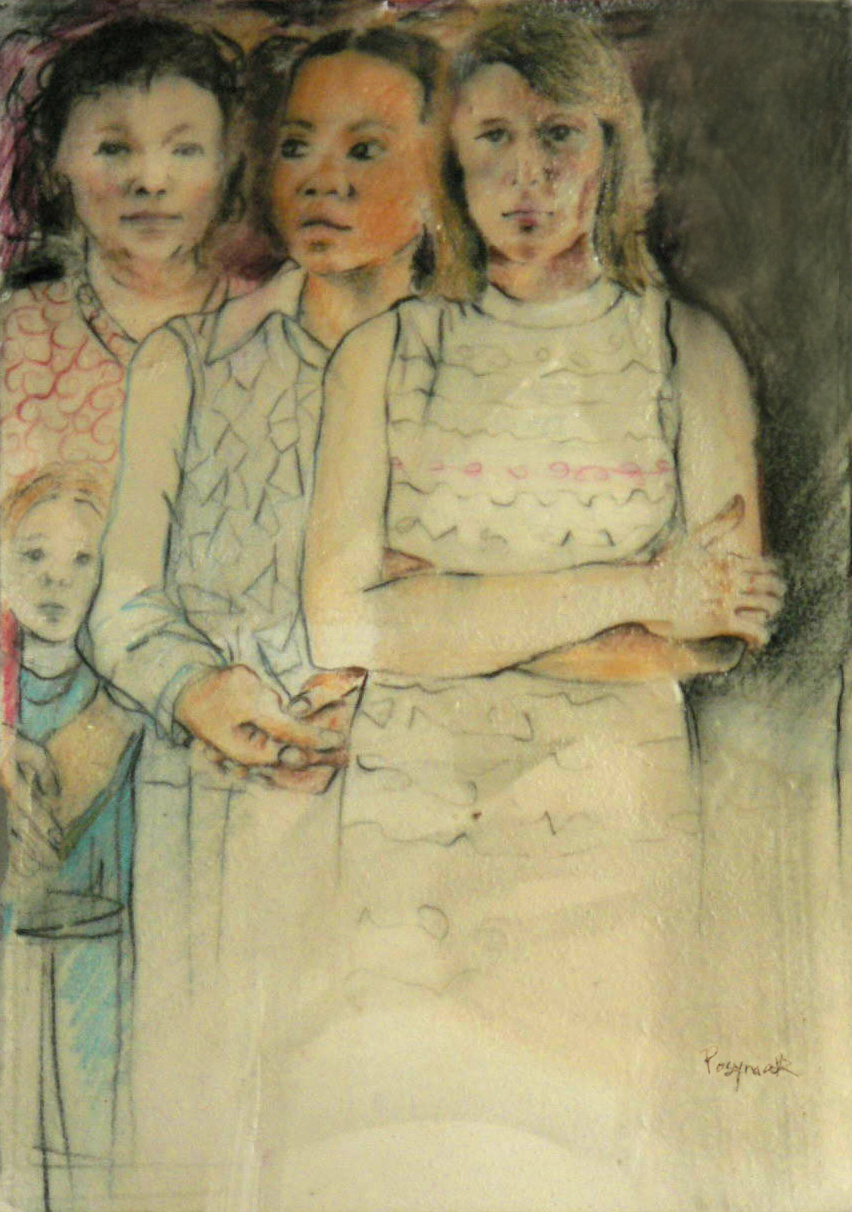
Cover Image from Print Copy of The Abortion Monologues by Teresa Posyniak