Category Archives: First Person

Struggling in the jolly season.

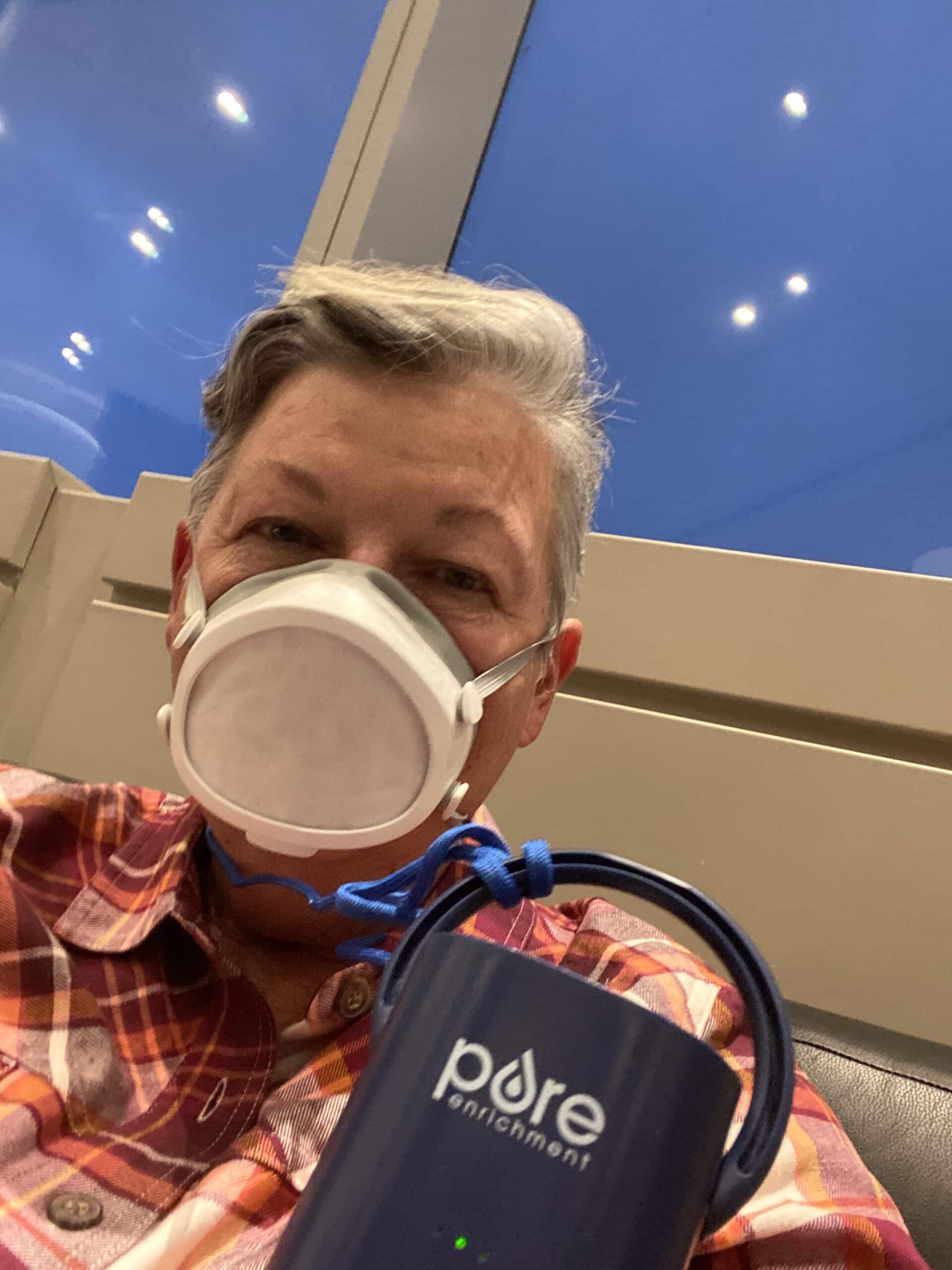
‘Tis the season to be jolly. Whatever you celebrate, whether it be Solstice or Hanukah or Christmas, or anything else (including the arrival of so many extra cookies and treats) I hope you are able to find peace and contentment in the season. I’m struggling.

Maybe you are struggling too.

Many of us are keeping the holidays very differently than we used to. Some are back to big get togethers, but I suspect there is friction, a little cognitive dissonance gnawing at the edges of whatever is happening.

Me? We’re keeping a quiet holiday. Just the three of us. Daughter arrived a week ago before the storms made travel almost impossible and worked ”from home” from our home until Friday. She had been isolating the week before, tested negative (as did all of us) and we are all in it together now for another couple of days.

We are not joining the big family gathering 4000 miles away for two reasons: we were just there in November and my desire to be indoors in a large group is zero. So we had our visit in November and somehow, miraculously, managed to make it back without getting sick. We took all kinds of precautions, but we were also lucky. 

I’ve been called a fear-monger on the socials. Ok. Yes, I am fearful of catching a disease we still know hardly anything about. The likelihood of getting long covid is twice that of being hurt in a car accident. If anyone is really interested, I’ll try and find the source for that figure. It stuck with me. I’m not so good with the memory stuff right now because I have a brain injury. 

So yeah. I’m being careful. My ”recovery,” such as it is, has been too hard won. And incomplete, even now, almost seven years later. I can’t go back. And SARS-CoV-2 causes brain damage (among so many other things).

I miss entertaining. I used to have big parties. Big holiday things. Big non-holiday things. But those days are over for now. And I’m grieving. Much and all as I do not want to be at the family gathering, I miss the family gathering. If that makes any sense. I even miss shopping. And I hate shopping. I miss things I hated in the before times. I miss the before times.

And I’m worried about those who are gathering. Will it be another superspreader Christmas? I want to be wrong. You have no idea how much I want to be wrong.

And even though I’m safe and cozy here with my beloved husband and daughter, and so grateful, I feel a pall over everything. Sometimes I feel absolute fury. Other times I feel merely disappointed. Oh, how I’d love to be wrong. But I’m not. I want to yell from the rooftops about what it takes to keep safer, how it’s not actually that hard, how it’s worth it. But no one wants to hear that. Tonight they want to party like it’s 2019.

Ok.

So the jolly season is not so jolly for me. I’m grateful. I’m warm and loved and privileged to have a turkey in the oven as I write. But there’s an edge to it all. I’m worried sick about people who have had SARS-CoV-2 three times. Two times. Once. I’m worried about those who pretend that’s not what they have. Or had. Yeah, maybe it’s not. But maybe it is. I’m worried we aren’t testing, tracing, tracking, learning. I’m worried that public health officials have abandoned their posts and debased their positions. I’m worried.

Like all of you, I’m doing my best. So ’tis the season.

Abortion: Everything Old Is New Again

As Roe v Wade is overturned in the US, it’s hard not to ponder what this means for reproductive rights in Canada, and of course, for our fellow humans south of the border.

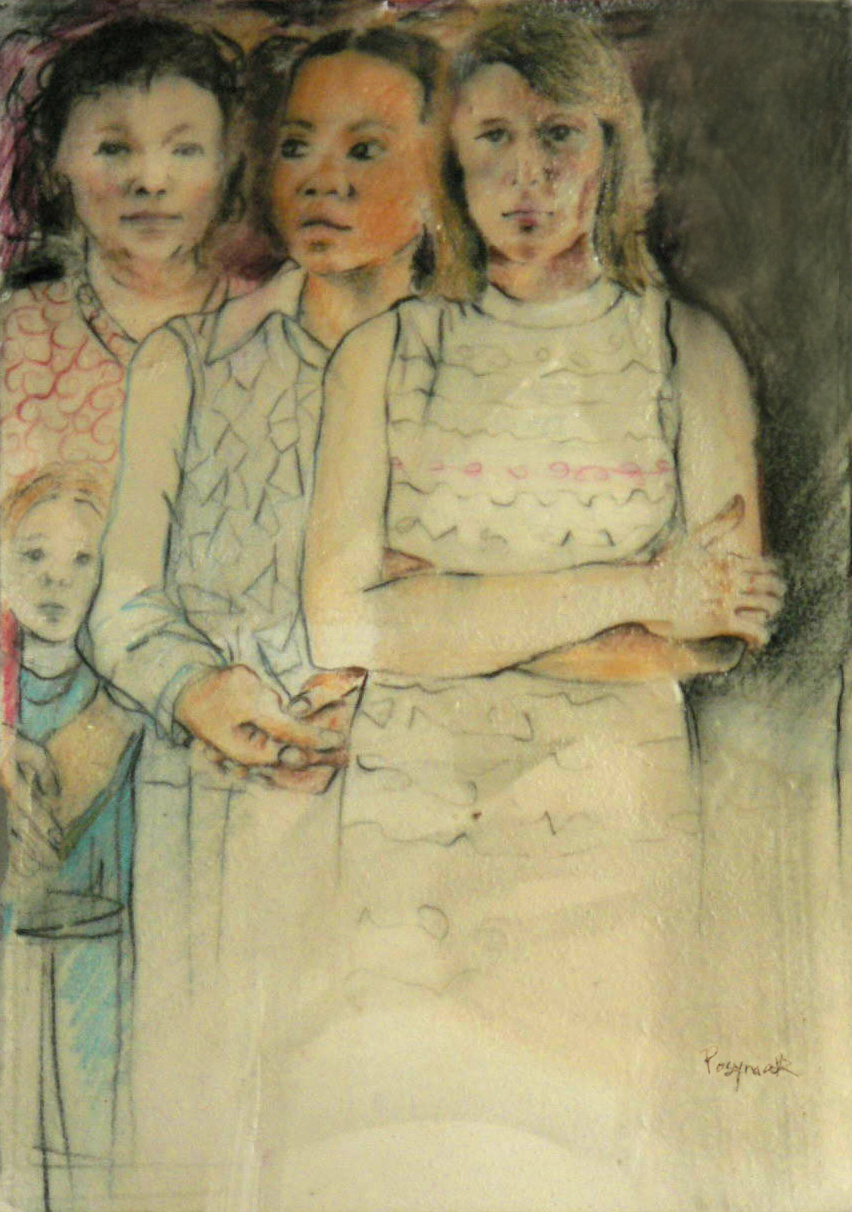
Cover of The Abortion Monologues, three women and a child standing together
The Abortion Monologues

I have a substantive body of work about abortion and frankly, I always hope I will never have to return to it. I want our rights to bodily autonomy to be secure. They never are. Nothing is. There’s always some patriarch, some autocrat, some fascist, ready to upend democracy and any social progress we have made to assert their will. The will to power. So here we go again.

My play, The Abortion Monologues, is out there and I offer it free of royalty payments to reproductive rights organizations and equity seeking groups who want to produce it. Get in touch. (Seriously, get in touch. We’ll still need to do a contract.) My old blog associated with the play is archival now. But it’s still there, and aside from some language that I would now make more trans inclusive, it’s still pretty spot on. You’ll find a lot of info there.

We’re going to have to step up our work again. That is, I am going to have to step up my work again. I hope you will join me. Without doubt, my next offering to the world, Patterson House, is pro-choice. It’s clear what happens to women who don’t control their bodies or their choices.

There are those in Canada who would send us backwards. We are a long way from Pierre Trudeau saying, ”The state has no place in the bedrooms of the nation.” I’m not even sure his son Justin would make such a bold statement. And that new Pierre is a threat to all of us.

Feminism is a theory. Feminism is an ideal. But feminism is also an action. It’s time to take action. As my friend Marnie reminds me, we can’t just hope for the best. Quoting David Orr, she says, ”Hope is a verb with its shirtsleeves rolled up.” So take action. Roll your sleeves up. We need you.

Do men read books about women?

According to an article in The Guardian, men generally don’t read books about women. They tend not to read books by women either. M.A. Sieghart reports that ”men were disproportionately unlikely even to open a book by a woman.”

That’s a darn shame. I don’t want to go to any sexist Venus and Mars place, but I think about this and wish I could speak to the dearest men in my life about some of the dearest fictional women in my life. I think they might get insight into the lives of women. That is, I think they might get insight into me. Sometimes these fictional women say the things I cannot. Read the first page of Claire Messud’s The Woman Upstairs, for example.

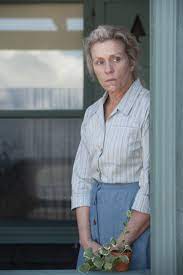
Recently, my husband read Olive Kitteridge by Elizabeth Strout. I was on a real Strout binge and was prepping Olive, Again for my book club. Olive was in my mind and even in my dreams. I would wake up and be in the passenger seat of Olive’s car, her big black purse crowding me. When I had concerns, I would wonder what Olive would think. Oh, let me tell you, I was in deep. There are so many ways I relate to this difficult and imperfect woman. There is Olive in me. This I know.

Frances McDormand as Olive

What a treat it was to be able to discuss her. Olive makes me feel normal. Or sort of normal.

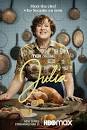
Similarly, I was just watching the new show on Julia Child, Julia (HBO) and in the first episode of season one, there is Julia, all hot flashy and having a conversation about menopause with her doctor. When she finally tells her husband she is changing, it is a moment of great tenderness.

Ad for HBO’s Julia

It’s lovely thinking about men watching this show (if they do) and witnessing a conversation like this and adding it to their general experience. That way, when such a time crops up in real life, they are not in a conversation that seems to come from Venus, but from this very earth. Maybe it will help all earthlings along the spectrum of sex and gender communicate just a wee bit better. Isn’t that what fiction is for? To help us understand each other?

Sieghart writes, ”If men don’t read books by and about women, they will fail to understand our psyches and our lived experience. They will continue to see the world through an almost entirely male lens, with the male experience as the default. And this narrow focus will affect our relationships with them, as colleagues, as friends and as partners. But it also impoverishes female writers, whose work is seen as niche rather than mainstream if it is consumed mainly by other women.”

As a woman about to release a book about women, this matters to me.

Living is hard work when you’re dying.

My friend is nearing the end of her life. I owe her so much. She is the person who taught me how to think.

I have so many feelings about it and everyone is worn out, I don’t want to burden the world with this. So, I’ll put it here, in my never read blog.

I was in my 30s when I met her. I foolishly thought it might be too late for me to do something different. She gave me examples of women who had done what I was trying to do, who had done it successfully. She gave me courage. She is whip smart and so generous. She loves to laugh. She loves playing games. She loves good food and fun company. She loves a cause. She loves justice and fights for it. She has the most diverse group of friends of anyone I have ever known. She attracts light.

Now I make her dinner. I am one of many who do this for her. She has a huge network of people who love her and help her, a sure sign of a life well-lived.

But we are in a pandemic. She cannot be with her people like she wants to. We cannot play games together. We see each other with masks on. Her beloved son and grandchildren live far away, in another country. She still cannot get her second vaccine. She is told she has to go to the mass vaccine site she went to for the first. She will need help and a wheelchair. Another friend is helping with this very practical matter. Will it happen in time?

What she wants more than anything is more time. Time with her grandchildren. She wants to hug them. She even wants to hug me and how I would love to hug her back. It is heartbreaking.

What she does not want is sympathy. These days, it is hard not to send it out to her over my mask. She sees it in my eyes. I catch myself. I offer her practical help. This is what she wants from me. So this is what I give. I honour her by doing what she asks of me, and she honours me by asking.

When my mother was dying, right at the very end, I realized I had thought of her as dying while she was still living. We label people as dying too soon. My friend is still living and her life is very hard right now. The grief of this time overflows.

On Languishing in the Pandemic

Month 13–or is it 14?–of the pandemic, and I am languishing. I did not have that particular word in mind until I read an article about languishing by Adam Grant in the NYT. I had been thinking maybe it was ennui, or maybe disinterest, and was sometimes even wondering if I had become hopelessly lazy.

That’s not it.

I told my husband I was unmotivated, which is true. Confessed it, actually. I am NOT normally an unmotivated person. In his article, Adam Grant says something about being indifferent to indifference and that feels right. I am indifferent to my indifference, disinterested in my disinterest. Maybe you feel the same.

I know I’m lucky. I can work from home and shelter where I am, relatively safe. I get groceries delivered. I am grateful to all of the workers who are keeping us all going and I advocate for their safety literally every day.

Part of it is certainly that while the world celebrates the arrival of vaccines (as do I), Ontario is worse off than ever because of a feckless provincial government. We have higher case numbers than ever and our ICUs are overflowing. Refrigerator morgue trucks are next. It didn’t have to be this way.

So, I try to focus on what I can control. I have a new project on the go. But I am not writing much now. My concentration is poor. It’s also my fifth crashiversary this week, which doesn’t help. Five years of brain injury. My lack of concentration isn’t just about the pandemic. I have been in some state of languishing for a while.

And even if my writing is stalled, there is other work to do. As two projects make their way through to publication, they need bits of my attention. I will get a galley to proof next week. There are questions about marketing. A plan must be made.

I have other projects I could pick up outside of work, things I would usually enjoy. I have wool enough to make six hats which I planned on giving as gifts next Christmas. I need to sew the collar on a summer shirt I am making (polka dots!) and then it will be done. Maybe ten minutes of work. It is sitting beside the sewing machine. Languishing. I could make an interesting dinner. Or I could just scramble a few eggs. I could go for a walk. There are people in my life to care for. Some of them are also languishing and how can I support them when I am too? A birthday cake must be baked. Doing things for others is usually something that cheers me up. The ingredients are all on my kitchen counter, waiting. My seedlings need replanting. The tomatoes are growing well, if a little spindly. Some of them are just lying down, like I want to. I have to stake them up with bamboo skewers.

Meh.

I need a bamboo skewer for me. What will that be? Sometimes, admitting you have a problem is the first step.

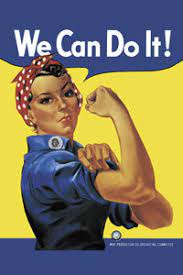
This is a “fake it till you make it” time if there ever was one. Time to fake some enthusiasm. Fake a sense of flourishing. As my character Alden often says to herself in Patterson House, “Buck up.” Wish me luck. I wish you luck too. We can do it.

Rosie the Riveter
Rosie the Riveter saying “We Can Do It”

Maybe I’ll have a nap first.

Begin Again

In my meditation today, I was reminded that when my mind wanders, I can begin again. Focus on the breath. Begin again.

We can always begin again. 

Today is a good day to think about that.

What could we do?

It starts with story. We must know our own story.

We must tell the truth about what happened to us.

We could understand that we are all in this together, that the success of one is the success of all, and not just for humans.

We could devote ourselves to an ethics of care and compassion, to kindness to self and others, knowing that others are connected to us, and we to them, in profound ways. 

We could be humble and acknowledge what we have broken and our own brokenness. We could grieve for what we have lost, because we know that we have lost so much. We are not even sure what it is. But we know. We feel it. It exists as a hollowness in our soul that no amount of food or alcohol or consumer goods or anything else can fill.

We could help each other through the grief.

We could repair what is broken. We could make it our work.

We are ALL in this together: the humans, the trees, the plants, the insects, the air, the animals, the soil, the water, and even the rocks. Even the rocks.

We could build an economy that knows that the earth is not merely a resource for humans to use (up), but a part of us as we are a part of it. The earth’s health is our health. It gives and gives and we, the humans, must stop taking so much.

We could remove the barriers to sharing what we do take.  

We  could build an economy that acknowledges limits. 

It could be beautiful.

Think of what you would begin again, if you could, and know that you can.