Author Archives: Jane Cawthorne

About Jane Cawthorne

Jane is a writer currently living in Victoria BC. She grew up in Toronto and also spent many years in Calgary where, among other things, she taught Women's Studies at Mount Royal College (now Mount Royal University). Her work is about women on the brink of transformation.

New Production of The Abortion Monologues

The fine folks at SHORE (that is Sexual Health Options Resource Education) in Kitchener-Waterloo, Ontario are producing The Abortion Monologues to raise funds for their good work.

The show will be November 4, 2017 at the Little Theatre in Kitchener-Waterloo. Contact SHORE for tickets or more information and if you are in the area, please support this work.

abortion_monologues_edit

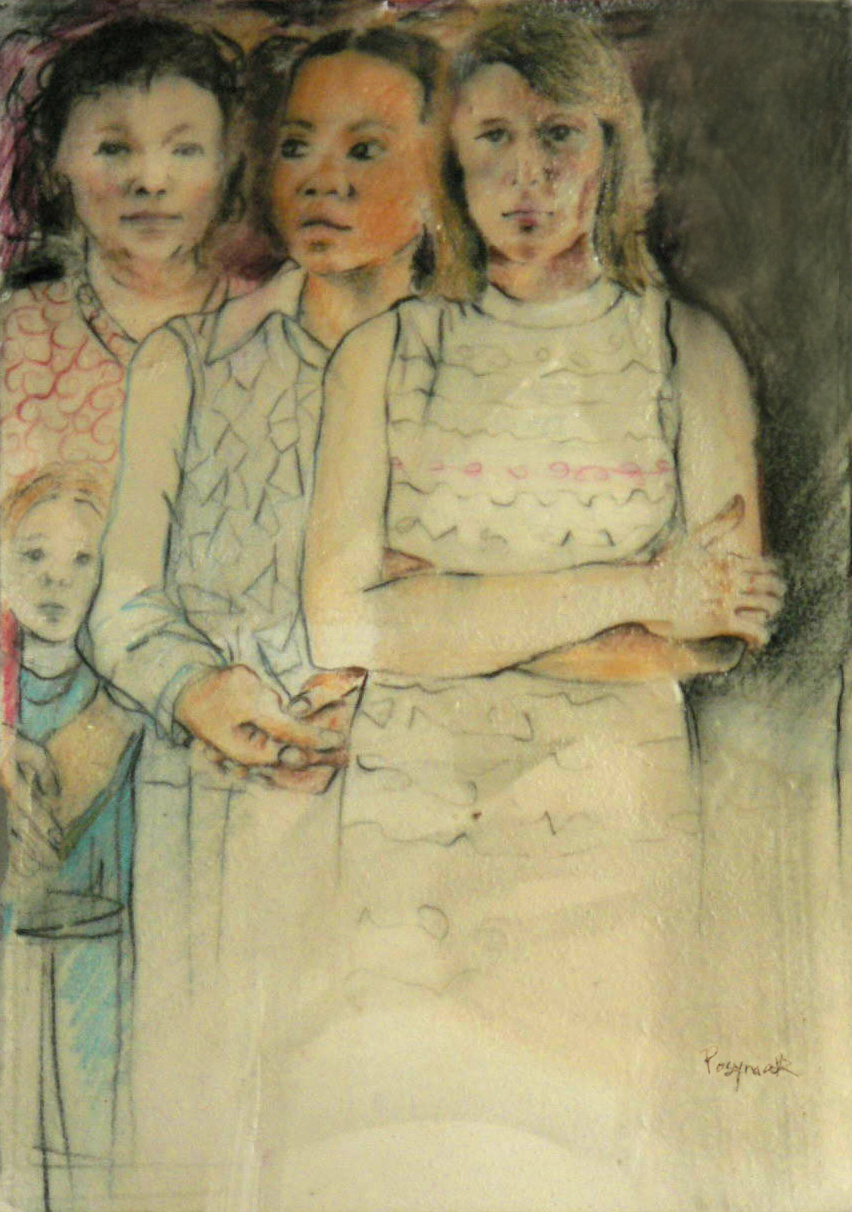
Cover Image from Print Copy of The Abortion Monologues by Teresa Posyniak


Writing Menopause and a Spring launch!

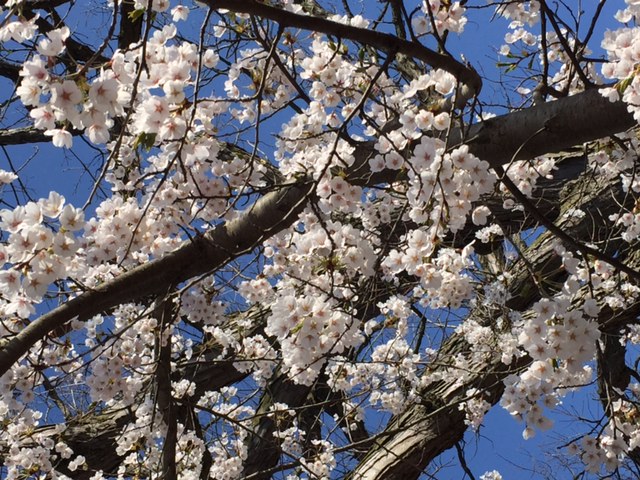
Actual physical copies of Writing Menopause: An Anthology of Fiction, Poetry and Creative Nonfiction arrived at my house the day before last, which was also the day that the cherry blossoms in my part of the world reached their peak. I wandered under the blossoms completely happy, book in hand, glad with the world. A totally satisfying moment. cherry blossoms April 17

It’s spring and puddle-wonderful, to steal a phrase from ee cummings. You might think this book should have come out in the fall. I’m glad it hasn’t. For too long, menopause has been considered an an autumnal moment of the ovaries. Even worse, women have been considered worthless as our reproductive capacity ends. As though that is all we are.

Five years ago or thereabouts when this book began, I was quite certain that by the time it was done, I would be menopausal. I am not. I’ve been menstruating for 43 years. That’s a long time. If I said I’d been married for 43 years, I might get congratulations. If I retired from a job after 43 years, I might get a gold watch or at least, a pat on the back. I expect no kudos for 43 years of menstruating but let’s face it, it hasn’t been a picnic. It’s a lot of work. I’m weary with it and I’m ready to retire.

When menopause finally happens for me, I will relish it. Bring on the cherry blossoms. Bring on the renewal. Bring on whatever it is that’s next. I’m ready. And when it happens, I’ll have this book and the community it has created to guide me through the change. Take a deep breath. Spring is here.  And so is Writing Menopause.

Join us at our launches if you can:

Calgary at Shelf Life Books, 1302 – 4 Street S.W. on May 25 at 7pm.

Featuring Rona Altrows, Jane Cawthorne, Shaun Hunter, JoAnn McCaig, E.D. Morin, Steve Passey, Roberta Rees, Lori D. Roadhouse and Rea Tarvydas.

Edmonton at Audreys Books, 10702 Jasper Avenue on June 9 at 7pm.

Featuring Margaret Macpherson, Lou Morin, Shirley Serviss, Rea Tarvydas, Jane Cawthorne and E.D. Morin.

Inanna Publications’ Spring Launch in Toronto at The Supermarket, Kensington Market, 268 Augusta Avenue, on June 14 at 6:30pm.

Featuring Jane Cawthorne, Merle Amodeo, B.A. Markus, Leanna McLennan, Gemma Meharchand and E.D. Morin.

In conjunction with three other Inanna Publications new releases!

Kingston at A Novel Idea, 156 Princess Street on June 15 at 7pm.

Featuring Louise Carson, Colette Maitland, B.A. Markus, E.D. Morin and Jane Cawthorne.

With all of our launches, we are grateful for the support of Inanna Publications, the Canada Council, the Quebec Writers’ Federation, Shelf Life Books, Audreys Books, The Supermarket and A Novel Idea.


Community in a Book: Writing Menopause

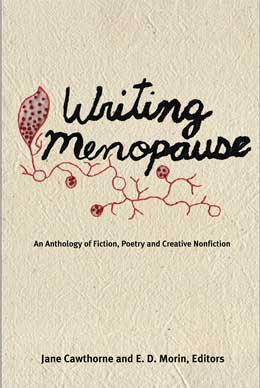
Writing Menopause is almost here. E.D. Morin and I co-edited this literary anthology of short fiction, poetry, creative nonfiction and other cross-genre pieces contributed by an incredible group of talented writers. In creating this book, we’ve found ourselves in a new community.  writing menopause

Elaine and I have always been aware that we were creating a community with our contributors. Every book creates a community, and that is part of the beauty of a book. For a long time, it was just us, and then our contributors and then our publisher, Inanna. It was a great moment when all of the contributors were announced and everyone else knew who was in our community too. We continue to introduce our members on our Facebook page and invite you to get to know all of them. And now we look forward to seeing this community grow as we launch this book and reach readers.

The first review, from THIS Magazine, is out.  We are delighted that the work has been called revolutionary. It’s a credit to the whole community.

You can pre-order a copy at Inanna.

Join our community if you can at our upcoming launches.

May 25, Calgary, Shelf-Life Books

June 9, Edmonton, Audrey’s Books

June 14, Toronto, The Supermarket (with several other new Inanna releases).

A Vancouver launch is still in the planning stages, but will likely be in the fall. You can follow us on Facebook for updates and details.

And I want to say a special thanks to E.D. Morin, (Elaine) my co-editor. I’ve had post-concussion syndrome since a car accident last April (yes, almost a year). Although the book was “done” and had been accepted by Inanna for publication already when the accident happened, as anyone who has ever ferried a book to publication knows, there is always still much to do before books are on store shelves. I could not have done this on my own. I’m grateful to have had this project with it’s big, creative, wildly diverse and supportive community during this time and am especially thankful for Elaine. You are amazing.

Existential Angst and Obama’s last 2016 Press Conference

I couldn’t watch it all. I’ll admit it. It was too sad. For all the reasons you expect. The world says goodbye to an ethical, rational, even-tempered leader who feels deeply the responsibility of his office. Too soon, we will say hello to an unethical, narcissistic sexual predator who does not even know the responsibility of his office.

I could practically feel the weight of the world on his shoulders. Yes, he feels responsible for everything. We know it keeps him up at night. Aleppo, Sudan, the plight of his own fellow-citizens, soldiers at home and those sent far away, their families, the lives of children around the world.

Meanwhile, the new guy stays up at night worrying about SNL. Worrying about himself. His own image.

The contrast could not be more stark.

Although we might not have always been in agreement, expecting to be is irrational. I’m not always in agreement with my own husband, let alone the leader of the free world. I’m not even American. He made unpopular decisions. It is an inevitability of the job. Yet, I have faith that he did his best. I have faith that he put the smartest people he could find in the room and listened to them.

It was sad to watch him, repeatedly, lay out a series of facts and then ask the press to draw their own conclusions. But that wasn’t good enough. They wanted hyperbole. They weren’t going to get it. They tried again. They wanted him to name and blame Putin. Nope. He wouldn’t do it. Well, they’ll have their hyperbolic president soon enough. Let’s see where it gets them.

But even all of this is not the real reason for my sadness. The real reason is that I felt Obama was talking to a nation that isn’t there anymore. The rational, the bipartisan, the people who talk to each other about their own lives, about politics, about important national and international issues over the mythical back fence, in the apartment lobby while picking up mail, or while waiting in the car-repair shop or in line at the grocery store—these people don’t exist anymore. They’ve been replaced by—what? By something else. And I felt myself as part of the past, a relic of a progressive era that was already dying when I was in high school and Reagan was elected. I felt the hopelessness that Obama warns against.

He says not to curl up in a fetal position. But I think I’ll have to. I’ll need to stay on the couch a little longer and think about it all, feel the truly existential angst of it.

I’m sure I’ll get up. Sure of it.

Meanwhile, I’ll re-read Ta-Nehisi Coates beautiful elegy to Obama. That is some writing to love.

Advice for a New Writer

Today, my physiotherapist told me that she wants to write. She has a story. She has written four pages. Her excitement was fantastic. Palpable. Electric. It made me remember how exciting writing used to be before I had this concussion and it became a struggle. Then she asked me a bunch of questions. Like I’m Stephen King or something.

img_3508

I answered, but I want a “do-over.” I want to give her a better answer than I could give when I was on the spot and having my neck moved around and sort of feeling like a big fake because I’m hardly writing at all now (because of the concussion). I want to give a better answer than the answers I first got when I started to write. I don’t want her to give up for a dozen years like I did. I don’t want her to have to feel around in the dark too much. A little feeling around is necessary, but there’s no need to be afraid and in the dark for too long.

If she had asked me another day, I might have told her to forget about writing and keep living her happy life. But today, I am an optimist, and if there is one thing writers know it is that if you are called to write, that’s the way it is.

To be clear, this is not actually what my physiotherapist wanted. She was asking for resources, for “the rules,” for information about how to share her work and who to share it with and what happens now that she has four pages. She wants to do this thing properly, whatever this thing is and whatever properly is.

It’s a tricky business, this advice giving. I have shelves full of craft books, an MFA and a history of teaching. What I do not have is an enviable publishing record. I’m not prolific. I just do my thing, something that took me years to be okay with. I toil in obscurity, as so many writers do. But I’m the writer she knows, the one that is on her table, the one that, thankfully, she feels safe enough to ask. That trust means a lot to me. I want to give her enough to keep the spark alight, but not so much to blow it out.

So, what did I tell her? First of all, I said, don’t worry about the rules too much. You’re doing the most important thing you can do right now, which is to get the story down. Just get it down. I don’t think I told her to do it fast, before she loses it, but I’ll say that now. Do it fast, before you lose it. Even if parts are in point form. Or in diagrams. Or emoticons. Or stick figures. There’s no time for grammar and corrections and worrying about your quotation marks right now. She is worried about her quotation marks.

When the story is down, you can start to worry about the quotation marks because they do matter. They really do. I told her what every new writer is told. Read Strunk and White, The Elements of Style. Those are the rules, and when you have a story down, you can revise and follow them. What I didn’t tell her is that after you’ve done that, you can break all of those very same rules. I don’t think she’s ready for that yet. Next, I told her the thing no writer wants to hear and every writer needs to hear. I told her that she will write this story many times before it’s done. What I forgot to tell her is that the first time is the most important time (except for the last) and the one that she needs to have done before she can do anything else.

Because she is sporty, I told her that learning to write is no different than learning a sport; you have to be bad before you are good; you have to practice to improve. I told her about writing groups. In my city, Toronto, there are writing groups that meet regularly at the public library. You can also join a drop-in group with the Toronto Writer’s Collective for free.

Then I suggested Julia Cameron’s The Artist’s Way, with a couple of warnings. I told her it was a little too “inspirational” for me, a person who thinks memes like “Live, Laugh, Love” are the ipecac of social media and prefers to use cute sayings painted on wood for kindling rather than home décor. But, I explained, if you can get past that and the talk of God (or as Cameron carefully explains, whatever it is that works for you if you prefer not to involve God in the whole process), it’s a good self-directed course in learning about your own creative process, what nurtures it, what shuts it down and how to avoid the latter.

And now that I’m at my desk and thinking more about it, I want to offer a couple of other books. Most writers I know list Anne Lamott’s Bird by Bird and Natalie Goldberg’s Writing Down the Bones among their favourites. I find something new in them every time I read them and I’ve read them so often now they’re like old friends. And, more importantly, both are good reads, even if you’re not a writer.

Two books with more “instruction” and a solid feminist bent are Dorothea Brande’s Becoming a Writer and Brenda Ueland’s If You Want to Write. Both speak to all of the important questions my physiotherapist will ask soon but hasn’t asked yet. These are next year’s questions, perhaps, but if she keeps writing, they are coming, and maybe having these two little slim and helpful volumes at the ready will help.

Finally, there is one other book I recommend to anyone who is transitioning from being a serious reader to a writer, and that is Francine Prose’s Reading Like a Writer.

I figure this is a year’s work, so time to stop.

And I have one last piece of advice. Don’t talk about your story. Protect it a bit. Keep it to yourself. Talking about it let’s the magic out, or at least it does for me.

Was there something essential to your early development as a writer that you’d like to tell my physiotherapist about, something that might encourage her? If so, please leave a comment. We would both welcome it.

Susan Faludi’s Backlash is as Relevant as Ever

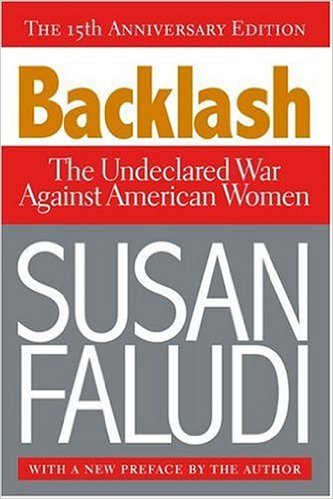
I am not surprised that at a time when the United States could elect it’s first woman President, there is a massive backlash against women and that her opponent is the personification of misogyny. Susan Faludi talked about this phenomenon in her ovumnal 1991 book, Backlash. This is a book that’s worth rereading now or reading for the first time. This cover image is from the 2006 re-release of the book with a new forward by Faludi. In it, Faludi says the backlash is over and laments that while there have been gains for women since 1991, “We have used our gains to gild our shackles, but not break them.”(xvi) backlash

But it’s not over. We’re living through it again now.

I’ve tried not to get caught up in the day to day debacles of election news. I’m trying to take the long view. In the long view, there is more at stake than simply who will be President, a Democrat or Republican. Americans have to ask themselves, will it be business as usual or will one more piece of the intersecting puzzle of oppression break? Will a woman, a qualified woman, a woman running against a uniquely unqualified man, a man so appalling he is a cartoon character, become President or will the cartoon character? If the cartoon character wins, so does the Backlash. Women will not have made a step forward, but will have taken innumerable steps back and with them will follow every other group seeking equity.

Faludi’s work tells us that the backlash is real, it can succeed and it does succeed. But it also shows us how desperately those who hold power will cling to their power, the measures they will go to, and how, as their desperation becomes increasingly apparent the more likely they are to lose. The backlash, in other words, is a good thing. It is evidence that we are winning.

Meanwhile, the rest of the world watches to see if the promise of America will hold or if we will be witness to another failure of the American experiment. Wouldn’t it be surprising if it were not unfettered capitalism or the open sore of racism, or even another expensive and failed military misadventure that brought America to its knees but if it were plain old sexism?

To be clear, I don’t want to see the US brought to its knees. I don’t want them to be made an international laughing stock. I’m quite fond of America and Americans and even lived there for a while. I want the American experiment to succeed. I’m cheering for the good guys. I want a US that says, “We’re working on it. Really. Here’s some proof. We elected a woman President. We didn’t let the most obviously misogynist (insert more adjectives here) man in the modern history of our country take charge. We strive to be better tomorrow than we are today.” After all, the American project is about the pursuit, isn’t it? It’s very nature is optimistic, and I want optimism to prevail.

So, rather than waste another second tracking the appalling antics of the man, why not go back to Susan Faludi’s book Backlash instead? It’s easy to apply her analysis to today’s events and gain some insight into why, exactly, the ground is shaking at this particular time in this particular way. I am convinced the revelations about the despicable man will continue so that even his most loyal backers are offered multiple opportunities to see clearly. If his race baiting didn’t open their eyes, then maybe his insults to people with disabilities might. Or veterans. If that doesn’t do it, then maybe his creepy sexual objectification of his own daughter will. If that doesn’t cut it, then maybe his business failures might. Something has to clear the film from their eyes. If that doesn’t flip the switch, maybe hearing him brag about sexual assault will. But rest assured, the opportunities for clarity are a gift and will be offered until they are no longer needed.

Or if you think Faludi is too old or too second wave or too (insert adjective here), spend your time reading more modern feminst analyses, those that are intersectional in nature. Here’s a list of blogs to get you started. It will do you a lot more good than watching another video of that man insulting someone and your intelligence.